To display crystals safely, set each one on a stable surface, keep color-sensitive stones out of direct sun, keep water-sensitive stones away from damp rooms, and give soft or fragile pieces enough space that nothing harder can knock against them. Get those four things right and almost any shelf, mantel, or tabletop can hold a beautiful display.
This guide covers the safety side of displaying. If you are still deciding which room a stone belongs in, Where Should You Keep Crystals in Your Home? walks through it room by room.
Start With a Steady Surface
Choose a shelf that sits level and stays put, away from a slamming door or the path a pet likes to take. Wood, stone, and glass all work well. A felt pad or folded cloth under heavier pieces protects both the stone and the shelf, and spheres always want a stand. Keep the heaviest specimens low and set tall towers and points back from the edge.
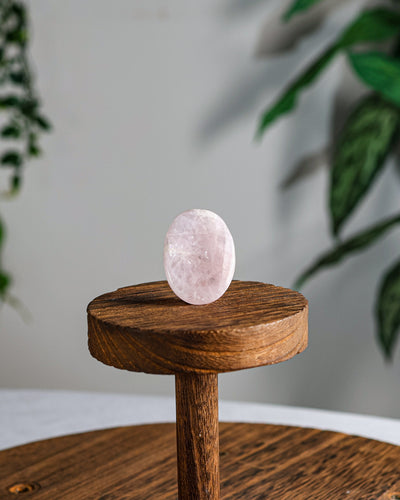
Leave a little space between stones, too. Quartz stones such as Amethyst and Rose Quartz rate 7 on the Mohs scale, hard enough to scratch many of the softer crystals they might be lined up beside.
Keep Color-Sensitive Stones Out of Direct Sun
The sunny windowsill is where most crystals lose their color. Prolonged direct sunlight can fade Amethyst's purple, and strong heat can turn it permanently yellow or orange. Most Rose Quartz holds its pink well, though some pieces pale after long exposure to strong sun. Fluorite and Celestine can fade too, and so can some colors of Tourmaline, a mineral family that also does better without sudden swings in temperature.
A bright room is fine; the trouble is hours of direct sun on the same stone, day after day. Move colored pieces back from the glass and let the window light the room instead.
Keep Water-Sensitive Stones Dry
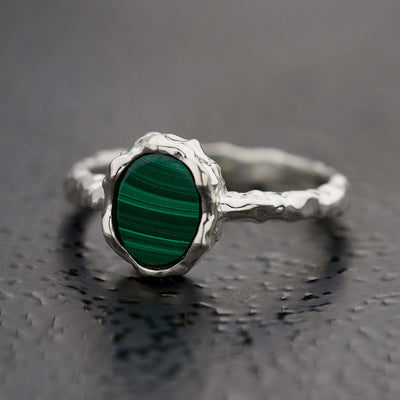
Bathrooms, the counter beside the sink, and the shelf where you water your plants all bring moisture that some stones cannot handle. Selenite slowly dissolves in water and flakes when it gets wet. Pyrite oxidizes when kept damp, first tarnishing and eventually crumbling. Malachite contains copper and belongs on a dry surface, well away from tabletop fountains. Celestine is water-sensitive too.
Turquoise asks for a slightly different kind of care. It is porous, so it absorbs water, body oils, perfume, and household chemicals, any of which can permanently change its color. Keep it away from the vanity and anywhere perfume or hand cream gets used.
Dust Gently
Dust does more than dull a polish. Fine grit can scratch a soft stone like Malachite, so a rough cloth does real harm. Use a soft, dry brush or a clean microfiber cloth, and never spray furniture polish or cleaner on a shelf that holds crystals.
Tourmaline has its own relationship with dust. It is pyroelectric, building a small electrical charge as its temperature changes, and Dutch traders once called it the ash-puller because a warmed crystal could draw ash from a pipe. A piece near a heater or a sunny spot may hold onto light dust, so give it a soft brush now and then. For delicate clusters, a closed glass cabinet cuts down on both dust and handling.
Give Soft and Fragile Stones Room
Softer stones scratch, chip, or split more easily than most people expect. Here is where to take extra care.
| Stone | Hardness (Mohs) | How to Display It |
|---|---|---|
| Selenite | 2 | Soft enough to mark with a fingernail; keep it dry and lift wands by the body so the ends do not snap |
| Celestine | 3 to 3.5 | Brittle tips break with little pressure; set clusters on a stable or padded surface where they will not be bumped |
| Malachite | 3.5 to 4 | Chips if knocked; keep it apart from harder stones |
| Fluorite | 4 | Perfect cleavage means a sharp knock can split it cleanly; give it a spot of its own |
| Turquoise | 5 to 6 | Scratches against harder stones; keep it dry and away from oils and sprays |
Keep the Display Feeling Fresh
Every so often, take each stone down, hold it for a moment, and notice whether it still feels right where it was. Cleansing belongs in that reset, matched to the stone. Sound suits Selenite, Celestine, Pyrite, and Turquoise, none of which should be rinsed. Amethyst and Rose Quartz recharge well in moonlight, a far kinder light for them than a sunny sill.
Before the next stone goes on the shelf, ask three questions: will the sun reach it, will water reach it, and what will it touch? Answer those honestly and your display can grow as full as you like, with every piece looking the way it did the day it came home.