

Some hurts never announce themselves. They settle in quietly and teach the heart to stay guarded. Rose Quartz is the stone for that guardedness: a soft pink quartz long kept for love and relationships and for the slow, honest work of emotional healing. It does not force anything open; it simply makes it feel safe to stop holding on so tightly.
Key Traits
- Judy Hall's foremost stone for the heart and the Heart chakra
- Draws off tension and replaces it with a calm, loving steadiness
- Restores trust and warmth to strained relationships
- Encourages self-forgiveness and a sturdier sense of self-worth
- Gentle enough to keep close through grief, loss and crisis
Intentions
Brief Overview
Rose quartz is the pink, usually massive variety of quartz, and in Judy Hall's crystal writing it is the most important stone for the heart, the one that teaches the true essence of love. It has been shaped into beads and talismans for thousands of years and remains one of the most widely kept crystals today, cut into palm stones, hearts, spheres and jewelry. Its appeal is its temperament: soft, unhurried and receptive, a stone for daily ritual rather than dramatic gestures.
Properties
This is a stone of unconditional love and deep peace. In Hall's tradition it purifies and opens the heart at every level, gently drawing off negative energy and replacing it with loving warmth. It strengthens empathy and sensitivity, helps you accept the changes that need to happen, and is said to lend weight to positive affirmations when held. It also turns your attention toward beauty, making it easier to notice what is good in yourself and around you.
Metaphysical Properties
- Opens the Heart chakra to give and receive love more freely
- Releases unexpressed emotion and long-held heartache
- Draws new love and restores harmony to existing bonds
- Supports self-acceptance, self-forgiveness and self-worth
- Steadies the emotions in moments of crisis or overwhelm
Physical Properties
- Type: Pink variety of quartz (silicon dioxide), usually massive
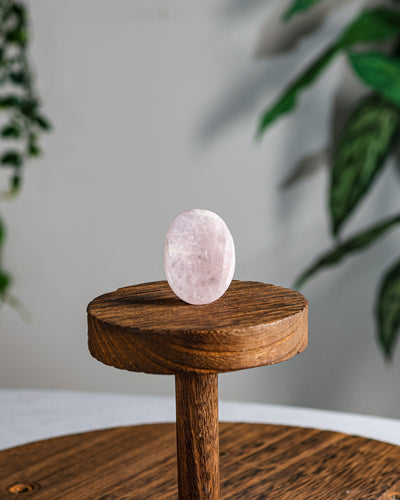
- Color: Pale blush to deep rose pink, often milky
- Luster: Vitreous
- Structure: Trigonal; typically massive, rarely found as distinct crystals
Meaning & Energy
Rose quartz means love in its most patient form: not only the spark of romance, but the steadier current of compassion, tenderness and belonging. Its energy is receptive rather than forceful. Hall notes that it draws love and relationships so readily that it is often paired with amethyst to calm things down. Set beside the bed or in the relationship corner of a home, it works slowly, softening what has hardened and warming what has grown cold.
Emotions
If you have never quite felt loved, rose quartz is traditionally used to open your heart so you can begin to receive it. If you have loved and lost, it keeps you company in the grief instead of hurrying you past it. It asks you to forgive yourself, to speak to yourself with the kindness you would offer a friend, and to believe you are worthy of the care you give so freely. Hall's point is simple: you cannot fully accept love from others until you have learned to love yourself.
Crystal Pairings
- Rhodonite – deepens heart-centered healing and helps release lingering resentment
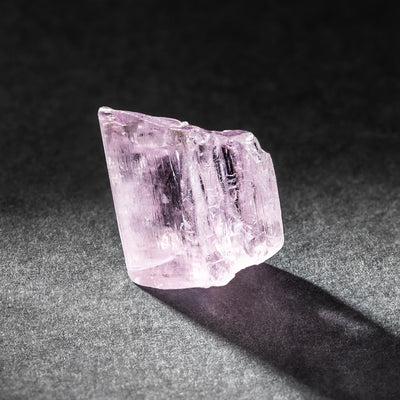
- Kunzite – opens the heart to receive love and softens the fears that guard it
- Amethyst – calms and balances rose quartz's strong pull toward romance
- Green Aventurine – comforts the heart and welcomes love in later chapters of life
Science & Origin
Rose quartz forms at high temperature in granitic pegmatites, almost always as massive pink quartz rather than separate crystals. Research on its color points to microscopic fibers of a pink borosilicate mineral related to dumortierite, making up well under one percent of the stone. Those fibers are why fine pieces look softly lit from within, and why most rose quartz holds its color well.
- Also Known As: Pink Quartz in the trade, though mineralogists reserve that name for a rarer, light-sensitive crystalline form
- Formation: Crystallizes at high temperature in granitic pegmatites, colored by microscopic dumortierite-related fibers
- First Discovery: Rose quartz beads found in Mesopotamia date to around 7000 BCE
- Safety Note: Non-toxic and water-safe; some pieces can pale with long, strong sun or high heat
Ancient Myths
- Greek myth credits Eros with bringing rose quartz to earth so its glow might stir love among mortals.
- One tale says Aphrodite tore herself on a briar while running to her wounded lover Adonis, and their mingled blood stained white quartz pink.
- Ancient Egyptians believed rose quartz could hold back the signs of aging, and Romans carved it into seals that marked ownership.
Chakras Table
| Chakra | Connection | Healing Focus | Energy Type |
|---|---|---|---|
| Heart | Primary — the stone's natural home, traditionally worn over the heart | Releasing heartache, restoring trust and self-love | Receptive, warming |
Planets Table
| Planet | Influence | Energy |
|---|---|---|
| Venus | Love, beauty and harmony | Warm, magnetic, tender |
Zodiacs Table
| Zodiac | Attribute | Benefit |
|---|---|---|
| Taurus | Steadfast, sensual devotion | Softens stubbornness and deepens loyalty in love |
| Libra | Harmony and partnership | Restores balance and fairness in relationships |
Elements Table
| Element | Power | Aspect |
|---|---|---|
| Water | Emotion and flow | Moves stored feeling and softens the heart |
| Earth | Steadiness | Grounds love into lasting, dependable care |
Sacred Numbers Table
| Number | Vibration | Meaning |
|---|---|---|
| 7 | Inner reflection | Turns love inward toward self-understanding and self-acceptance |
Color Variations
- Pale blush: the most common shade, soft and milky, easy to wear every day
- Deep rose: a richer, more saturated pink, prized in finer material such as Madagascar rough
- Star rose quartz: rare pieces that show a six-rayed star under a single point of light
- Translucent gem rose: clearer material cut into cabochons and beads with a gentle inner glow
Mohs Scale Hardness
Rose quartz measures 7 on the Mohs scale, like all quartz. In practice it holds up well to daily handling, jewelry and pocket carry and resists scratches from steel and glass, though harder stones such as topaz and sapphire can still mark it. It has no cleavage, but it can chip if knocked against a hard surface.
Chemical Formula
Rose quartz is silicon dioxide, SiO2, the same chemistry as all quartz; its pink comes from trace inclusions rather than a different base mineral.
- Silicon (Si): one atom per formula unit, the framework of the crystal
- Oxygen (O): two atoms per formula unit, linking the silicon into tetrahedra
- Dumortierite-related fibers: microscopic borosilicate inclusions behind the pink color
- Trace iron and titanium: carried within those fibers and linked to the rose hue
Summary of Composition
- Mineral Class: Silicate (tectosilicate, quartz group)
- Crystal System: Trigonal
- Transparency: Translucent, rarely transparent
- Luster: Vitreous
Care Instructions
- Rinse under lukewarm water and pat dry with a soft cloth
- Recharge in moonlight, on a selenite plate or with sound
- Keep deep-pink pieces out of long, strong sun and away from high heat
- Store apart from harder stones and avoid knocks that can chip it
Final Summary
Rose quartz asks very little and gives back quietly: a softening, a warmth, the sense that your heart is safe to open again. Keep it where you rest or where you love, and let it do its slow, patient work.