A meaningful gift is one chosen for who the person is right now and given with a clear wish for them. It does not need to be large or expensive. What makes it land is that the receiver can tell you were paying attention, and that the thing in their hands stands for something you hope for them.
That is the whole practice of intention-based giving. You decide what you wish for someone first, and then you look for the object that can hold that wish.
What Giving Has Always Meant
People were handing each other small, chosen things long before there were holidays to shop for. Rose Quartz beads found in Mesopotamia date to around 7000 BCE. Medieval European soldiers carried Amethyst amulets into battle for protection and a cool head. In both cases the object mattered because of what it was asked to stand for.
Many traditions hold that a gift carries the intention of the person who gave it. You can take that literally or not. Either way, it asks the same thing of you, which is to slow down and think about one person for a few minutes. A gift given out of obligation tends to feel flat on both sides. A gift given with thought feels warm, even when it costs very little.
How to Choose a Gift With Intention
- Name the wish first. Before you shop, finish this sentence about the person: "This year, may you have more..." Rest, courage, comfort, and steadiness are all good answers.
- Match it to their current chapter. Think about what they are moving through now, such as a new job, a loss, a move, or a long tired stretch. A gift that honors the chapter means more than one that matches a hobby.
- Choose a symbol they will use. A candle, a journal, or a stone that fits in a pocket gets picked up again and again. Each time it does, the wish comes back with it.
Stones That Carry a Clear Wish
Crystals make meaningful gifts because each one already has a long-held meaning, so the stone does some of the talking for you. These four cover the wishes people most often want to send.
| Stone | What it stands for | Give it when you want to say |
|---|---|---|
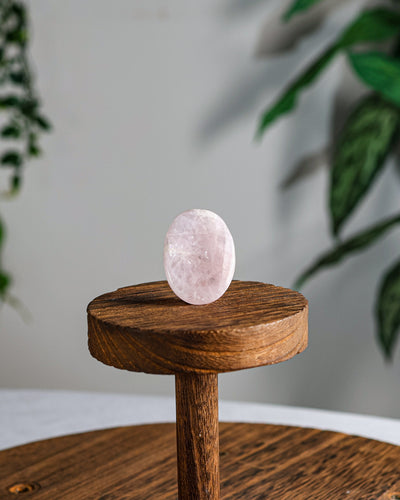
| Rose Quartz | Unconditional love, comfort in grief, self-worth | "You are loved exactly as you are." It suits someone who is grieving, or who gives care more easily than they receive it. |
| Citrine | Abundance, confidence, optimism | "Good things are coming, and you are ready for them." It suits a graduate, a new business owner, or anyone starting over. |
| Amethyst | A quiet mind, clear intuition, restful sleep | "May you finally get some rest." It suits the friend whose thoughts keep running after the day is done. |
| Black Tourmaline | Protection, grounding, steady boundaries | "May you feel safe and steady wherever you land." It suits someone who is moving, or who soaks up everyone else's stress. |
If you would rather shop by person than by wish, our crystal gift guide has two picks for each of six people on your list.
A Short Blessing Before You Wrap It
This takes about a minute, and it works for any gift, stone or not.
- Hold the unwrapped gift in both hands and take three slow breaths.
- Picture the person opening it on an ordinary day, weeks from now.
- Say your wish aloud in one plain sentence, such as "May this bring you calm."
- Write that same sentence on the tag, then wrap the gift.
When you hand it over, tell them why you chose it. Most people never hear the reason behind a gift, and the reason is the part they keep.
What Stays After the Paper Is Gone
The stone will end up on a nightstand or at the bottom of a coat pocket, and for long stretches nobody will think about it. Then one hard afternoon a hand will close around it, and the sentence on the tag will come back. Nobody can fully explain why a small object can hold a wish for that long. People have trusted it to for nine thousand years.