Chakra frequencies are usually given as the seven natural notes of the C major scale, one note for each chakra, rising from C at the base of the spine to B at the top of the head. In standard tuning that runs from about 262 Hz to 494 Hz, and in the 432 Hz tuning many sound practitioners prefer, it runs from about 257 Hz to 485 Hz. The full chart is below, along with a stone for each center and a simple way to work with the scale.
Where the Correspondence Comes From
The chakras come from Indian tantric and yogic traditions, which describe seven energy centers stacked along the spine. Pairing each one with a musical note is a much more recent, largely Western addition to that system. The logic is simple and rather lovely: seven centers and seven notes, both climbing from low at the root to high at the crown.
Hold it the way you would any traditional correspondence, like a birthstone. It is a shared map practitioners have found useful, not a measurement of the body, and the frequencies below are simply the pitches of those notes on a tuned instrument. What the practice offers is a structure for your attention and the felt experience of sound moving through you.
Chakra Notes and Frequencies Chart
Frequencies are rounded to the nearest hertz in equal temperament, the tuning of pianos and most modern instruments, starting at middle C.
| Chakra | Note | A = 440 Hz | A = 432 Hz |
|---|---|---|---|
| Root Chakra | C | 262 Hz | 257 Hz |
| Sacral Chakra | D | 294 Hz | 288 Hz |
| Solar Plexus Chakra | E | 330 Hz | 324 Hz |
| Heart Chakra | F | 349 Hz | 343 Hz |
| Throat Chakra | G | 392 Hz | 385 Hz |
| Third Eye | A | 440 Hz | 432 Hz |
| Crown | B | 494 Hz | 485 Hz |
Some 432 Hz charts list the Root Chakra at exactly 256 Hz. That figure comes from an older convention that fixes C at 256 Hz. You may also see the Solfeggio frequencies, which run from 396 Hz at the root to 963 Hz at the crown; that is a separate system, not built on the notes of a scale.
440 Hz or 432 Hz?
Standard tuning sets the A above middle C at 440 Hz, the international concert pitch. The 432 Hz tuning lowers every note by about a third of a semitone, and many people in sound healing describe it as warmer or softer. That preference is a matter of feel; the popular claim that 432 Hz is nature's own frequency is lore rather than established science. Choose the tuning that settles you, and keep it the same within a session.
A Stone for Each Note
Crystals give each note a place to land in your hand.
- Root Chakra, C: Red Jasper, a steady red stone for grounding and settling scattered energy.
- Sacral Chakra, D: Carnelian, a warm orange chalcedony carried for creativity and motivation.
- Solar Plexus Chakra, E: Citrine, golden quartz kept close for confidence and self-worth.
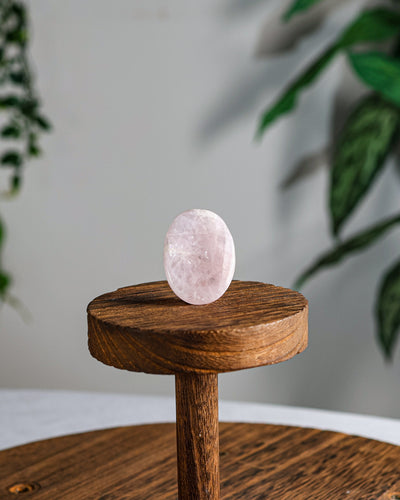
- Heart Chakra, F: Rose Quartz, the classic stone of compassion and unconditional love.
- Throat Chakra, G: Blue Lace Agate, a soft blue agate for calm, honest expression.
- Third Eye, A: Amethyst, long placed on the brow during meditation to quiet the mind and open intuition.
- Crown, B: Clear Quartz, which crystal tradition credits with harmonizing all seven chakras and opening the crown.
There is real science hiding in that last pairing. Quartz is piezoelectric, producing a small electric charge under pressure, which is why it keeps time in watches and stabilizes frequencies in electronics.
A Simple Scale Practice
- Sit or lie down somewhere quiet and set your seven stones in a line, Red Jasper at the base and Clear Quartz at the top, or rest each one on its center.
- Starting with C, play or hum each note in turn on a tuning fork, singing bowl, keyboard, or tuning app, and let it ring until it fades.
- As each note sounds, rest your attention on its center and its stone, and breathe slowly.
- When you reach B, stay in the quiet for a few breaths before you move.
Humming counts. Your own voice is the instrument you always have with you, and the sound does your stones a kindness too, since sound is one of the traditional ways to recharge Rose Quartz.
Climb the scale once, from the low C at your root to the high B at your crown, and notice where the sound settles easily and where it asks for a little more time.