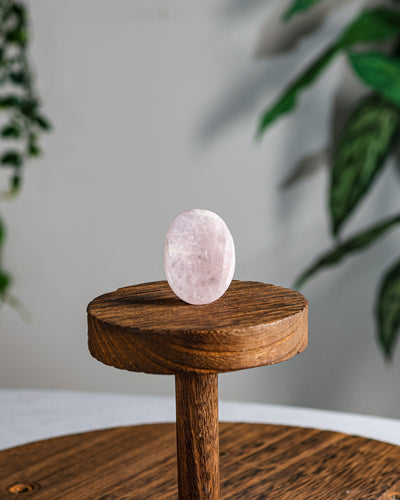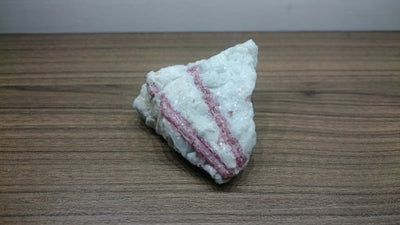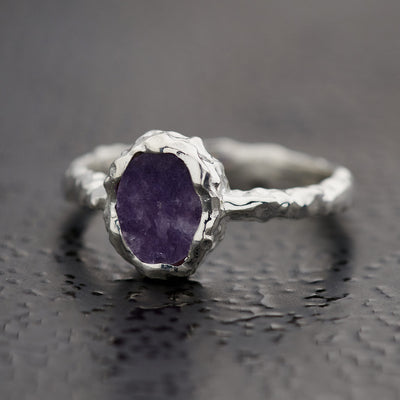


When your mind keeps replaying the same worry long after the day is done, Lepidolite offers a softer place to land. This lilac mica glitters with thin, scale-like layers and carries natural lithium in its structure, and it has become one of the most trusted stones for calm and stress relief. It is also known as a stone of transition, kept close when life is changing faster than you can process it. Hold it and the noise begins to settle, leaving room for the kind of clarity that only arrives once you stop bracing.
Key Traits
- Lilac to violet mica with a soft, glittering shimmer
- Carries natural lithium in its crystal structure
- Forms in thin, scale-like layers and fine granular masses
- Traditionally used to quiet racing thoughts
- Known as a stone of transition through life changes
Intentions
Brief Overview
Lepidolite is a lithium-bearing mica prized for its lavender color and the fine, sparkling flakes that give it its name. In crystal tradition it is one of the gentlest stones in the kit, reached for when stress builds, thoughts loop and life feels mid-change. Judy Hall calls it a transition stone that releases and reorganizes old patterns, and she places it among the most effective cleansing tools when it is in its mica form.
Properties
Lepidolite is used to slow a racing mind and soften the emotional spikes that come with stress. In crystal healing tradition it is worked with to interrupt obsessive thinking, settle the mind before sleep and help you focus on what matters while filtering out distraction. It also supports independence, encouraging you to reach your goals on your own terms rather than leaning on outside approval.
Metaphysical Properties
- Quiets obsessive, looping thoughts
- Supports the release of outdated emotional patterns
- Opens the heart, throat, third eye and crown
- Clears the mental clutter of screens and overstimulation
- Encourages steady independence through change
Physical Properties
- Type: Lithium-bearing mica (sheet silicate)
- Color: Lilac, lavender, violet, pink and grayish white
- Luster: Pearly to vitreous
- Structure: Monoclinic; flaky mica books or fine granular masses
Meaning & Energy
Lepidolite does not jolt you awake; it lets things settle. Its energy works the way its layers look, in fine sheets that come to rest one on top of another until the whole feels steady. Hall describes it as a stone that clears blockages from the throat, heart, third eye and crown and dispels negativity, and in practice that reads as space: room to speak plainly, to feel without flooding and to see the next step without the static. It is the stone for the pause between one chapter and the next.
Emotions
When your thoughts will not slow down, Lepidolite gives your hands and your attention somewhere else to rest. It supports you through the pressure that builds quietly until it feels loud, the late-night replaying of conversations and the weariness of carrying a habit you are ready to put down. Keep it close through a move, a breakup, a new job or any change you did not quite choose, and let it remind you that steadiness can be gentle. You do not have to force calm; you only have to give it room.
Crystal Pairings
- Amethyst – deepens calm and quiet, restful stillness
- Rose Quartz – wraps emotional release in self-compassion
- Pink Tourmaline – its natural pegmatite partner, softening the heart through change
- Smoky Quartz – grounds you while old patterns clear
Science & Origin
Lepidolite belongs to the mica group and stands out as the most abundant lithium-bearing mineral. It crystallizes in lithium-rich granite pegmatites as the last of the melt cools, often alongside pink tourmaline, spodumene and quartz. Mineralogists now use the name for a series of micas between polylithionite and trilithionite rather than a single species.
- Also Known As: Lithia Mica, Lithium Mica, Purple Mica
- Formation: Crystallizes in lithium-rich granite pegmatites, often alongside pink tourmaline, spodumene and quartz
- First Discovery: Named in 1792 by Martin Heinrich Klaproth from specimens found at Rožná, Moravia (Czech Republic)
- Safety Note: Safe to handle; wash hands after handling flaky rough pieces, keep loose flakes from small children and pets, and use only the indirect method for elixirs
Ancient Myths
- Lepidolite was named in 1792 by the German chemist Martin Heinrich Klaproth, from the Greek lepidos, meaning scale, for the glittering scale-like flakes of the specimens he studied from the Rožná pegmatite in Moravia.
- In 1861 Robert Bunsen and Gustav Kirchhoff processed about 150 kilograms of lepidolite and found a new element in it, rubidium, named from the Latin rubidus, deep red, for the red lines it showed in their spectroscope.
- In crystal healing tradition lepidolite is known as a stone of transition, kept close through endings and new beginnings and tucked under the pillow to settle a busy mind before sleep.
Chakras Table
| Chakra | Connection | Healing Focus | Energy Type |
|---|---|---|---|
| Heart | Secondary: emotional release | Softening old emotional armor | Emotional |
| Throat | Tertiary: honest expression | Speaking plainly during change | Communicative |
| Third Eye | Primary: inner clarity | Quieting mental noise and looping thoughts | Mental |
| Crown | Primary: calm awareness | Settling the mind for meditation and rest | Spiritual |
Planets Table
| Planet | Influence | Energy |
|---|---|---|
| Jupiter | Growth and perspective | Widens your view so change feels less threatening |
Zodiacs Table
| Zodiac | Attribute | Benefit |
|---|---|---|
| Libra | Seeks balance | Restores equilibrium after emotional swings |
| Pisces | Deep sensitivity | Eases overwhelm and emotional flooding |
Elements Table
| Element | Power | Aspect |
|---|---|---|
| Water | Emotional flow | Softens rigid emotional patterns |
| Air | Mental clarity | Clears repetitive, circular thought |
Sacred Numbers Table
| Number | Vibration | Meaning |
|---|---|---|
| 8 | Balance and renewal | The steady cycle of release and rebuilding |
Color Variations
- Soft lilac to lavender, the most familiar shade
- Deeper violet to plum in dense, fine-grained pieces
- Pink to rose tones, often beside pink tourmaline
- Grayish white to silvery where manganese is scarce
Mohs Scale Hardness
Lepidolite measures about 2.5 to 3.5 on the Mohs scale, about as soft as a copper coin and far softer than quartz. Its flaky mica structure means it scratches easily and raw pieces can shed small flakes, so it suits tumbled stones, palm stones and carvings kept in a pocket pouch of its own rather than rings or bracelets that take daily knocks.
Chemical Formula
Lepidolite's general formula is K(Li,Al)3(Al,Si)4O10(F,OH)2, a potassium lithium aluminum silicate with fluorine and hydroxyl in its layered structure.
- Potassium (K): sits between the silicate sheets and holds them together
- Lithium (Li): the defining element that separates lepidolite from other micas
- Aluminum and silicon (Al, Si): build the stacked silicate sheets
- Fluorine and hydroxyl (F, OH): complete the crystal lattice
Summary of Composition
- Mineral Class: Silicate (phyllosilicate), mica group
- Crystal System: Monoclinic
- Transparency: Translucent to opaque
- Luster: Pearly to vitreous
Care Instructions
- Wipe your stone with a soft, dry cloth; a quick rinse is fine for tumbled pieces, but never soak it
- Keep raw, flaky pieces dry, since water can loosen their layers
- Store it in its own pouch, away from harder stones that will scratch it
- Recharge it on a selenite plate or under moonlight, and keep it out of long stretches of direct sun
Final Summary
Lepidolite does not ask you to push through; it shows you how to settle. Keep it by the bed, on the desk or in your pocket through the next big change, and let each shimmering layer remind you that clarity comes once the noise comes to rest.