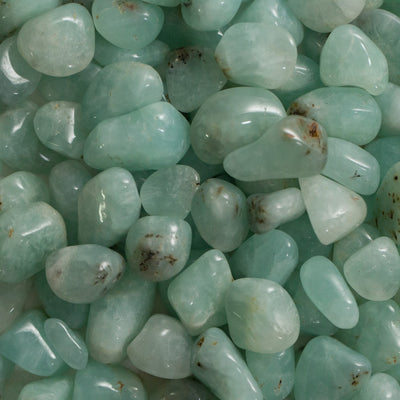
Chrysoprase wears its apple-green color like an open invitation, soft, warm, and unmistakably heart-centered. Prized since antiquity for its glow, this chalcedony has long been reached for in love and relationships work and for the slower business of calm and stress relief, easing a heart that has been holding onto more than it needs to. Its gentle color has a way of making self-forgiveness feel possible, which is exactly the work chrysoprase does best. This isn't a stone that pushes, it simply makes room.
Key Traits
- Vivid apple-green to lemon-green chalcedony
- Colored by trace nickel within a quartz structure
- Named by the ancient Greeks for its leek-green hue
- Historically favored by Alexander the Great and Frederick the Great
- Durable hardness of 6.5 on the Mohs scale
Intentions
Brief Overview
Chrysoprase is a nickel-colored variety of chalcedony, prized since antiquity for its vivid, translucent green and sometimes called "Australian Jade" in the trade, though it has no relation to true jade. Major sources include the United States, Russia, Brazil, Australia, Poland, and Tanzania, with Australia's Marlborough deposits among the most significant modern sources of gem-quality material.
Properties
Chrysoprase is worked with for gentle heart-opening and self-forgiveness, helping to examine old patterns of resentment without harsh self-judgment. It is often used to ease an anxious mind into calm, steady speech and to restore a sense of emotional security after periods of self-doubt.
Metaphysical Properties
- Opens the heart to compassion and self-forgiveness
- Eases anxious, racing thoughts into calm
- Encourages honest, thoughtful speech
- Restores a sense of emotional security and hope
- Supports healthy independence within close relationships
Physical Properties
- Type: Chalcedony (cryptocrystalline quartz)
- Color: Apple green to lemon green
- Luster: Waxy to vitreous when polished
- Structure: Microcrystalline, no visible crystal faces
Meaning & Energy
Chrysoprase's meaning has stayed remarkably consistent since antiquity: a stone of hope, truth, and quiet renewal. Its soft green energy doesn't demand transformation so much as invite it, gently loosening the grip of old resentment so something more honest can take its place.
Emotions
When your heart feels weighed down by old hurt or your own harsh self-judgment, chrysoprase offers a gentler way to look at it. It encourages you to speak honestly instead of reactively, and to extend yourself the same forgiveness you'd offer someone else. Keep it close during a season of healing a relationship, including your relationship with yourself.
Crystal Pairings
- Rose Quartz – deepens its heart-opening, unconditional warmth
- Green Aventurine – adds gentle optimism to its calming energy
- Moonstone – supports emotional flow alongside its steady calm
- Prehnite – reinforces honest self-reflection and inner peace
Science & Origin
Chrysoprase forms when silica-rich groundwater deposits chalcedony into cavities within nickel-bearing rock, with trace nickel giving the stone its signature green. Major sources include Australia, Poland, Tanzania, Brazil, Russia, and the United States.
- Also Known As: Australian Jade (trade name; not a true jade)
- Formation: Deposited from silica-rich groundwater into cavities within nickel-bearing host rock
- First Discovery: Known and named since antiquity, with major modern deposits identified in Australia's Marlborough region
- Safety Note: Generally safe to handle; avoid intense, prolonged sunlight, which can fade its color
Ancient Myths
- The name chrysoprase comes from the Greek chrysos ("gold") and prason ("leek"), a reference the ancient Greeks and Romans used to describe its vivid green color as early as antiquity.
- According to a long-standing legend, Alexander the Great wore a chrysoprase amulet into battle, believed by his soldiers to bring good fortune, though the stone was reportedly lost when it fell into a river before his final campaign.
- Prussian King Frederick the Great was so fond of chrysoprase that he had it inlaid throughout the decor of his Sanssouci Palace in the 18th century, cementing its reputation as a gemstone of refined taste.
Chakras Table
| Chakra | Connection | Healing Focus | Energy Type |
|---|---|---|---|
| Sacral | Secondary | Restoring creative, emotional flow | Energizing |
| Heart | Primary | Opening the heart to compassion and hope | Restorative |
Planets Table
| Planet | Influence | Energy |
|---|---|---|
| Venus | Love, warmth, and gentle self-acceptance | Nurturing |
Zodiacs Table
| Zodiac | Attribute | Benefit |
|---|---|---|
| Taurus | Steady emotional security | Grounds affection in patient loyalty |
| Libra | Balanced relationships | Supports fairness and honest communication |
Elements Table
| Element | Power | Aspect |
|---|---|---|
| Water | Emotional flow and healing | Emotional |
| Earth | Grounded, steady comfort | Physical |
Sacred Numbers Table
| Number | Vibration | Meaning |
|---|---|---|
| 6 | Harmony | Compassion, nurturing, and heart-centered balance |
Color Variations
- Classic vivid apple green, the most sought-after shade
- Soft, pale lemon-green material
- Deeper, almost emerald-toned green from certain Australian deposits
- Mottled or banded material with visible chalcedony striping
Mohs Scale Hardness
At 6.5 to 7 on the Mohs scale, chrysoprase is durable enough for regular wear in rings and bracelets, standing up well to daily use while still benefiting from care around harder abrasives.
Chemical Formula
Chrysoprase is silicon dioxide, SiO₂, in its cryptocrystalline chalcedony form, with trace nickel impurities responsible for its green color.
- Si – Silicon
- O – Oxygen
- Ni (trace) – Nickel, responsible for the green color
Summary of Composition
- Mineral Class: Silicate (Chalcedony/Quartz group)
- Crystal System: Trigonal (cryptocrystalline, no visible crystal faces)
- Transparency: Translucent
- Luster: Waxy to vitreous
Care Instructions
- Clean with mild soap and warm water; avoid prolonged soaking
- Keep out of direct, intense sunlight, which can fade its green color over time
- Avoid ultrasonic cleaners if the stone has any natural fractures
- Store separately from harder gemstones to prevent scratching
Final Summary
Chrysoprase has spent centuries being reached for by people who wanted their heart to feel lighter, and that reputation hasn't dimmed. Let its soft green glow remind you that hope and honesty tend to travel together.