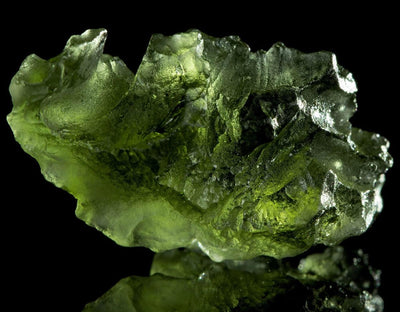
Prehnite carries a soft, pearled-green calm that has earned it a name among crystal healers: the stone that heals the healer. Formed in the slow, mineral-rich final breath of cooling basalt, it is reached for to support intuition and clarity, especially for those who spend their own energy caring for others. Where louder stones demand attention, prehnite works quietly — sharpening inner knowing while it steadies an overloaded mind. It is a stone for anyone who gives generously and sometimes forgets to refill their own reserves.
Key Traits
- Soft pale to mid-green calcium aluminum silicate, often in smooth, grape-like botryoidal clusters
- Pearly to vitreous luster with a gentle, almost translucent glow
- Rated 6 to 6.5 on the Mohs scale
- The first mineral in recorded history named after a person — Colonel Hendrik von Prehn
- Forms in the gas cavities of cooling basalt, alongside zeolite minerals
Intentions
Brief Overview
Prehnite is a calcium aluminum silicate that forms in the last cooling stages of basaltic lava, filling gas cavities left behind as the rock solidified. Its soft sage-to-apple green color and smooth, rounded crystal habit set it apart from sharper, more angular minerals, and its gentle appearance matches its reputation: prehnite is worked with less to charge a room than to quiet one. Long associated with intuitive insight and protective calm, it has become known in crystal-healing circles as "the healer's stone" — the crystal reached for by people who spend their own energy tending to others.
Properties
At its core, prehnite is a stone of quiet restoration. It is worked with to steady an overactive mind, to sharpen the kind of inner knowing that gets crowded out by noise and obligation, and to wrap the wearer in a subtle protective calm rather than a hard shield. Traditionally placed at the third eye, it is said to support visualization and prophetic dreaming, while its association with the heart keeps that clarity from turning cold or detached.
Metaphysical Properties
- Traditionally called "the healer's stone," reached for to restore depleted energy after giving care to others
- Supports precognition, inner knowing, and vivid visualization during meditation
- Offers a gentle, protective seal around the aura rather than a hard boundary
- In Feng Shui tradition, used to encourage the release of clutter and outworn habits
- Long associated with easing nightmares and old, deep-seated fears
Physical Properties
- Type: Calcium aluminum silicate hydroxide (phyllosilicate)
- Color: Pale sage to apple green, occasionally yellow or colorless
- Luster: Pearly to vitreous
- Structure: Orthorhombic, typically botryoidal or stalactitic masses
Meaning & Energy
Prehnite's meaning is tied to the way it forms: quietly, in the last gas pockets of cooling lava, filling empty space with soft mineral light rather than the sharp geometry of most crystals. That same quality shows up in its metaphysical reputation. It doesn't announce protection the way black tourmaline does, or intuition the way labradorite does — it simply fills the gaps where energy has gone thin. Colonel Hendrik von Prehn's name attached to the stone in the 1780s, making it the first mineral in history named for a person, but its meaning long predates the label: a stone that steadies without demanding, and clears without confrontation.
Emotions
If you have been giving more than you've had reserves for, prehnite meets that exhaustion without judgment. It supports you in naming the fears that surface late at night — the ones too vague to name in daylight — and in trusting the quieter insights that come once the noise settles. Held during meditation or kept near where you sleep, it can make it easier to let go of what you're holding onto out of habit rather than need, whether that's a possession, a grudge, or an old story about not having enough.
Crystal Pairings
- Amethyst – deepens the meditative, third-eye work prehnite begins
- Citrine – supports the clutter-clearing and abundance-inviting side of prehnite's Feng Shui reputation
- Moldavite – intensifies prehnite's connection to spiritual insight and rapid inner change
- Clear Quartz – amplifies prehnite's protective, clarifying focus
Science & Origin
Prehnite forms in the final, mineral-rich stage of basalt's cooling, crystallizing inside gas bubbles left behind as the lava solidified — the same environment that produces zeolite minerals. It holds the distinction of being the first mineral in history to be named after a person.
- Also Known As: Cape Emerald
- Formation: Hydrothermal deposits in the vesicles (gas cavities) of basalt and related volcanic rock
- First Discovery: 1783, Cape of Good Hope, South Africa, by Colonel Hendrik von Prehn; described in 1788 by Abraham Gottlob Werner
- Safety Note: Generally safe for handling; avoid harsh chemicals and sharp impacts, which can chip its edges
Ancient Myths
- Prehnite holds a unique place in mineralogical history as the first mineral ever named after a person — Colonel Hendrik von Prehn, who brought the first specimens from the Cape of Good Hope to Europe in the 1780s.
- In modern Feng Shui practice, prehnite is known as "the clearing stone," kept in the home to encourage the release of possessions, habits, and old emotional patterns that no longer serve.
- In crystal-healing tradition, prehnite is called the stone that "heals the healer," said to restore those who spend their own energy caring for others, and traditionally placed on the third eye to support visualization and prophetic dreaming.
Chakras Table
| Chakra | Connection | Healing Focus | Energy Type |
|---|---|---|---|
| Heart | Soft green color long linked to unconditional love and giving | Restoring depleted heart energy after caregiving | Nurturing |
| Third Eye | Traditional third-eye placement for visualization and prophecy | Sharpening intuition and inner knowing | Illuminating |
Planets Table
| Planet | Influence | Energy |
|---|---|---|
| Venus | Rules love, harmony, and restoration | Gentle |
| Neptune | Governs intuition, dreams, and spiritual insight | Mystical |
Zodiacs Table
| Zodiac | Attribute | Benefit |
|---|---|---|
| Libra | Seeks balance and fairness in giving and receiving | Encourages replenishing what's been given away |
| Virgo | Practical, detail-oriented, drawn to order | Supports clearing clutter and outworn habits |
| Pisces | Deeply intuitive and emotionally attuned | Strengthens trust in inner vision |
Elements Table
| Element | Power | Aspect |
|---|---|---|
| Earth | Roots visualization in practical follow-through | Stabilizing |
| Water | Governs intuition and emotional restoration | Receptive |
Sacred Numbers Table
| Number | Vibration | Meaning |
|---|---|---|
| 7 | Insight | Spiritual reflection, inner wisdom, and quiet understanding |
Color Variations
- Pale sage green — the most common and recognizable shade
- Apple to mid-green — richer saturation, often in botryoidal clusters
- Yellow-green to golden — less common, warmer-toned material
- Colorless to white — rare, seen in less-included specimens
Mohs Scale Hardness
Prehnite rates 6 to 6.5 on the Mohs scale, similar to window glass or a pocketknife blade. That makes it durable enough for careful everyday wear but soft enough to scratch against harder stones or rough handling, so it benefits from a bit more care than quartz or tourmaline.
Chemical Formula
Prehnite's formula is Ca2Al(AlSi3O10)(OH)2, identifying it as a calcium aluminum silicate hydroxide.
- Ca — calcium, anchors the crystal's structural framework
- Al — aluminum, occupies two distinct sites within the lattice
- Si — silicon, forms the mineral's silicate sheet structure
- OH — hydroxide, contributes to the mineral's softness and pearly luster
Summary of Composition
- Mineral Class: Phyllosilicate
- Crystal System: Orthorhombic
- Transparency: Translucent to opaque
- Luster: Pearly to vitreous
Care Instructions
- Cleanse with sage smoke, sound, or a soft dry cloth rather than prolonged soaking
- Brief rinses in lukewarm water are fine; dry the stone immediately afterward
- Keep away from harsh chemicals, ultrasonic cleaners, and direct high heat
- Store separately from harder stones like quartz or topaz to prevent surface scratching
Final Summary
Prehnite doesn't ask to be the loudest stone in the room — it asks to be the quietest kind of useful. Formed in the last mineral breath of cooling lava and named for the officer who first carried it to Europe, it has spent more than two centuries doing the same understated work: steadying the mind, sharpening intuition, and giving something back to those who spend themselves caring for others. Keep it close when your own reserves need refilling.