Shopping cart

Clarity • Focus • Calm
AAA Colorful Fluorite Beaded Bracelet
Regular price
$20.00 USD
Sale price
$20.00 USD
Regular price
Unit price
per

Intuition • Protection • Clarity
AAA Labradorite Beaded Bracelet
Regular price
$15.00 USD
Sale price
$15.00 USD
Regular price
Unit price
per

Calm • Intuition • Stress Relief
Amethyst (Dark) Beaded Bracelet
Regular price
$15.00 USD
Sale price
$15.00 USD
Regular price
Unit price
per

Calm • Clarity • Courage
Aquamarine Beaded Bracelet
Regular price
$15.00 USD
Sale price
$15.00 USD
Regular price
Unit price
per

Protection • Grounding • Release
Black Obsidian Beaded Bracelet
Regular price
From $16.00 USD
Sale price
From $16.00 USD
Regular price
Unit price
per

Protection • Grounding • Stability
Black Tourmaline & Herkimer Diamond Two-Stone Cuff Bracelet
Regular price
$228.00 USD
Sale price
$228.00 USD
Regular price
Unit price
per

Protection • Grounding • Stability
Black Tourmaline Beaded Bracelet
Regular price
From $16.00 USD
Sale price
From $16.00 USD
Regular price
Unit price
per

Grounding • Courage • Protection
Bloodstone (Heliotrope) Bracelet
Regular price
$15.00 USD
Sale price
$15.00 USD
Regular price
Unit price
per

Calm • Communication • Serenity
Blue Lace Agate Beaded Bracelet
Regular price
$15.00 USD
Sale price
$15.00 USD
Regular price
Unit price
per

Motivation • Creativity • Courage
Carnelian Beaded Bracelet
Regular price
$15.00 USD
Sale price
$15.00 USD
Regular price
Unit price
per

Clarity • Amplification • Focus
Clear Quartz Beaded Bracelet
Regular price
$15.00 USD
Sale price
$15.00 USD
Regular price
Unit price
per

Clarity • Mental Focus • Calm
Fluorite (green) Beaded Bracelet
Regular price
$15.00 USD
Sale price
$15.00 USD
Regular price
Unit price
per

Clarity • Focus • Calm
Fluorite (Purple) Beaded Bracelet
Regular price
$15.00 USD
Sale price
$15.00 USD
Regular price
Unit price
per

Grounding • Courage • Devotion
Garnet Beaded Bracelet
Regular price
From $15.00 USD
Sale price
From $15.00 USD
Regular price
Unit price
per

Confidence • Ambition • Grounding
Goldstone Beaded Bracelet
Regular price
$15.00 USD
Sale price
$15.00 USD
Regular price
Unit price
per

Opportunity • Heart Healing • Calm
Green Aventurine Bracelet
Regular price
$15.00 USD
Sale price
$15.00 USD
Regular price
Unit price
per

Grounding • Protection • Confidence
Hematite Beaded Bracelet
Regular price
$15.00 USD
Sale price
$15.00 USD
Regular price
Unit price
per

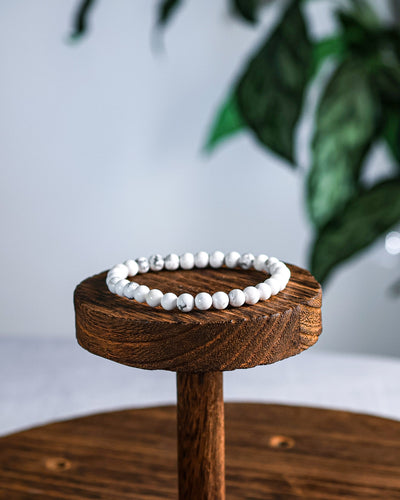
Calm • Patience • Restful Sleep
Howlite Beaded Bracelet
Regular price
$15.00 USD
Sale price
$15.00 USD
Regular price
Unit price
per

Grounding • Quiet Confidence • Calm
India Agate Beaded Bracelet
Regular price
$15.00 USD
Sale price
$15.00 USD
Regular price
Unit price
per

Intuition • Protection • Clarity
Labradorite Beaded Bracelet
Regular price
$12.00 USD
Sale price
$12.00 USD
Regular price
Unit price
per

Grounding • Protection • Strength
Mahogany Obsidian Bracelet
Regular price
$15.00 USD
Sale price
$15.00 USD
Regular price
Unit price
per

Intuition • New Beginnings • Calm
Moonstone & Labradorite Two-Stone Cuff Bracelet
Regular price
$228.00 USD
Sale price
$228.00 USD
Regular price
Unit price
per

New Beginnings • Abundance • Optimism
Moss Agate Beaded Bracelet
Regular price
$15.00 USD
Sale price
$15.00 USD
Regular price
Unit price
per

Abundance • Confidence • Optimism
Natural Citrine Beaded Bracelet
Regular price
$15.00 USD
Sale price
$15.00 USD
Regular price
Unit price
per

Calm • Intuition • Emotional Balance
Opalite Beaded Bracelet
Regular price
$15.00 USD
Sale price
$15.00 USD
Regular price
Unit price
per

Forgiveness • Emotional Balance • Grounded Love
Rhodonite Bead Bracelet
Regular price
$15.00 USD
Sale price
$15.00 USD
Regular price
Unit price
per

Love • Emotional Healing • Comfort
Rose Quartz Beaded Bracelet
Regular price
$15.00 USD
Sale price
$15.00 USD
Regular price
Unit price
per

Clarity • Cleansing • Calm
Selenite Beaded Bracelet
Regular price
From $16.00 USD
Sale price
From $16.00 USD
Regular price
Unit price
per

Protection • Grounding • Calm
Shungite Beaded Bracelet
Regular price
From $20.00 USD
Sale price
From $20.00 USD
Regular price
Unit price
per

Grounding • Protection • Stress Relief
Smoky Quartz Beaded Bracelet
Regular price
$15.00 USD
Sale price
$15.00 USD
Regular price
Unit price
per

Calm • Grounding • Balance
Snowflake Obsidian Beaded Bracelet
Regular price
$15.00 USD
Sale price
$15.00 USD
Regular price
Unit price
per

Clarity • Intuition • Calm
Sodalite Beaded Bracelet
Regular price
$15.00 USD
Sale price
$15.00 USD
Regular price
Unit price
per

Love • Emotional Healing • Calm
Strawberry Quartz Beaded Bracelet
Regular price
$15.00 USD
Sale price
$15.00 USD
Regular price
Unit price
per

Confidence • Grounding • Focus
Tigers Eye Beaded Bracelet
Regular price
$15.00 USD
Sale price
$15.00 USD
Regular price
Unit price
per