Add $19.00 more for a free bracelet
$6.00
Black Sage Smudging Stick 4"
$8.00
Couldn't load pickup availability
Mugwort is Artemisia vulgaris, a wayside perennial that grows along roadsides, riverbanks, and disturbed ground across Europe, temperate Asia, and North America. In the American smudge trade it is bundled and sold as Black Sage, a name it shares with the western species Artemisia douglasiana and Artemisia nova, and occasionally with Salvia mellifera, a true Salvia that is a different plant entirely. Sage Spirits carries it as the Black Sage Smudging Stick 4", made for smoke cleansing. Whichever Artemisia is in the stick, the traditional use is consistent: it is burned for dreams, visions, introspection, and protection during inward work, and it is one of the few ritual herbs valued more for what it opens than for what it clears away.
Item: One (1) black sage (mugwort) smudge stick
Look: Dark gray-green mugwort leaves, tightly bundled
Size: About 4" long.
Note: Natural materials vary in size, color and scent. Photos show the typical look. For smoke cleansing only; do not ingest.
Mugwort is Artemisia vulgaris, an aromatic perennial of the daisy family, Asteraceae. Despite the trade name Black Sage it is not a true sage; the related western species Artemisia douglasiana and Artemisia nova are sold under the same name, and confusingly so is Salvia mellifera, a genuine Salvia of the mint family. Artemisia species carry small amounts of thujone, the bitter compound also found in wormwood, alongside cineole and camphor.
Safety
For smoke cleansing only. Do not ingest. Burn with ventilation and never leave smouldering herbs unattended.
Mugwort is one of the most widely traveled ritual plants on earth, growing wild along roadsides and riverbanks across Europe, temperate Asia, and North America. Pliny the Elder recorded that a traveler carrying artemisia would not feel the weariness of the road, and Roman soldiers were said to line their sandals with its leaves. In China the related Artemisia argyi is hung at doorways during the Duanwu festival. In the modern American smudge trade the plant is sold under the name Black Sage, a stick reached for when the intention is dreaming and introspection rather than a hard sweep of a room.
Our sage and botanicals are farm-grown or sustainably harvested, never wild-poached, and we ask every supplier to show us how. Read our Sage Sourcing Promise.
Ships from Thousand Oaks, CA. Free shipping to the contiguous U.S.
Same family
Other smudgings in the shop · Read the Mugwort (Black Sage) guide
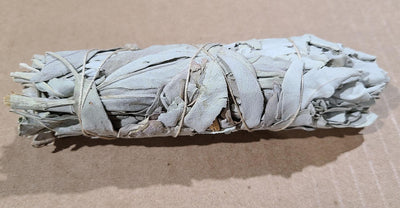
White Sage
California White Sage Smudging Stick 4"
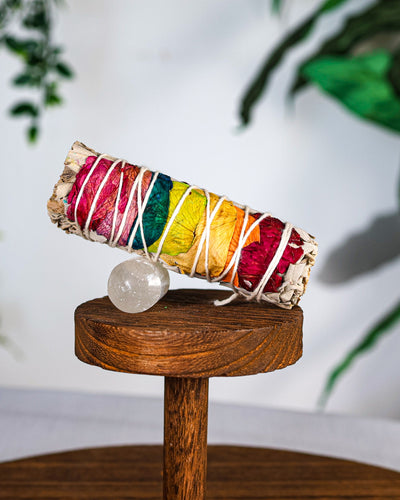
White Sage
Color Rose Petals White Sage Bundle
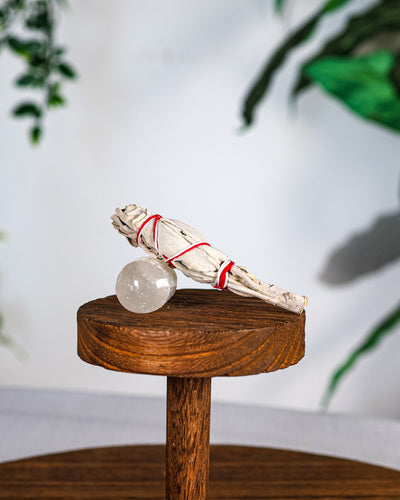
White Sage
California White Sage Mini Torch
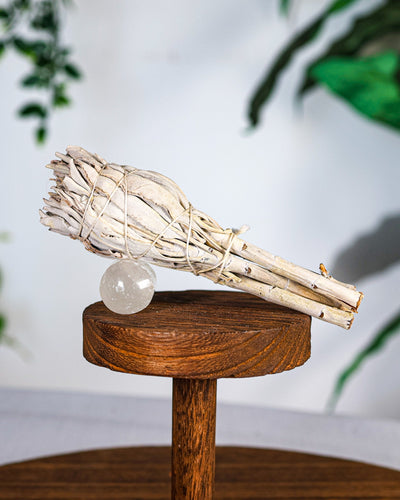
White Sage
California White Sage Torch
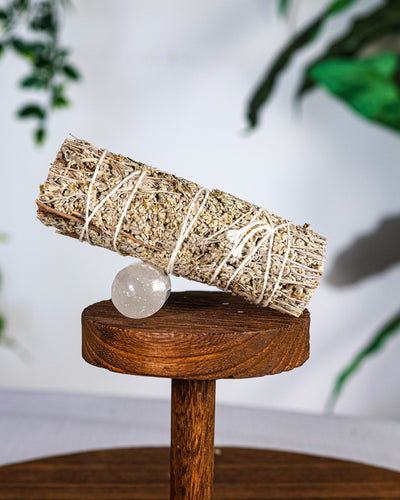
Blue Sage
Blue Sage Bundle
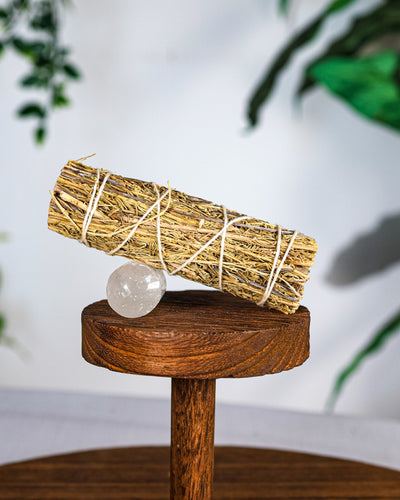
Desert Sage
Desert Sage Bundle
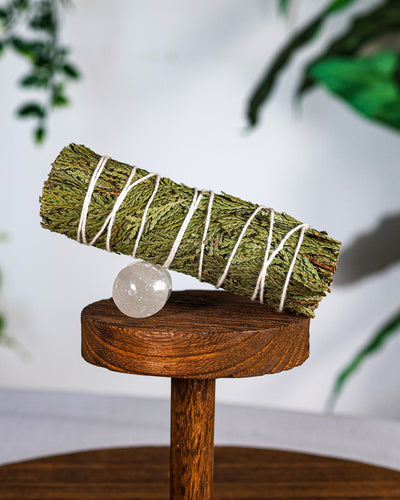
Cedar
Cedar Bundle
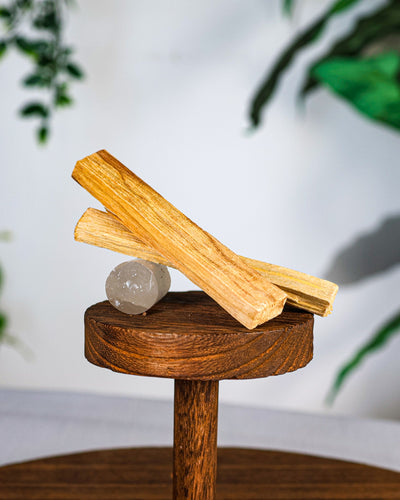
Palo Santo
Palo Santo Sticks (3)

