An Imbolc ritual is a short practice for the first stirrings of spring: clear a small space, light one candle for the returning light, and set one gentle intention for something you want to begin. It takes about twenty minutes and needs only a candle, a pen, and a slip of paper. Do it at dusk on February 1, which is a Monday in 2027, or on the evening of January 31 if you follow the old custom of starting a festival at sundown the night before.
What Imbolc is
Imbolc is a Gaelic festival that falls halfway between the winter solstice and the spring equinox, the point on the Wheel of the Year where the light is clearly returning while the ground is still cold. It is tied to Brigid, an Irish goddess later honored as Saint Brigid, whose feast day is February 1, and to the hearth fire, which is why a candle sits at the center of most Imbolc practices. Imbolc also lands in the middle of Aquarius season, a sign that likes a fresh idea.
What this in-between time tends to bring up
Late winter can feel impatient. The days are longer, but the mornings are still dark, and it is easy to feel behind on a year that has barely started. Imbolc asks for something much smaller than a resolution: one spark, tended gently, with just enough room cleared for it to catch.
What you will need
- A candle and a steady holder, set away from curtains and paper
- A pen and two slips of paper
- One to four stones, if you would like something to hold
- A quiet corner at dusk
The Imbolc ritual, step by step
- Clear a small space. Wipe down a windowsill, shelf, or table. Set Selenite there and keep it dry.
- Name what winter held. Hold Moonstone and write on the first slip one thing you are ready to set down from the dark months. One line is enough.
- Light one candle. As the wick catches, say: "The light is returning, and something small is ready to begin." Never leave the flame unattended.
- Set one small intention. Hold Carnelian and write on the second slip one thing you want to start, in a single sentence. Make it small enough to begin this week, then rest the stone on top of it.
- Plant it. Set Moss Agate beside the candle and sit with the flame for ten minutes or so.
- Close the ritual. Tear up the first slip, blow out the candle before you leave the room, and tuck the second slip under the Moss Agate.
Stones for an Imbolc ritual
The ritual is complete with a candle alone. If you would like something to hold, these are the four we reach for at Imbolc.
Selenite is a translucent, moon-pale gypsum named for Selene, the Greek goddess of the Moon. The Romans cut thin panels of it to set into windows and soften the light coming through, which suits a festival about light returning. Crystal tradition uses it to clear stagnant energy from a space. It is very soft and dissolves in water, so cleanse it with sound, smoke, or moonlight instead of rinsing it.
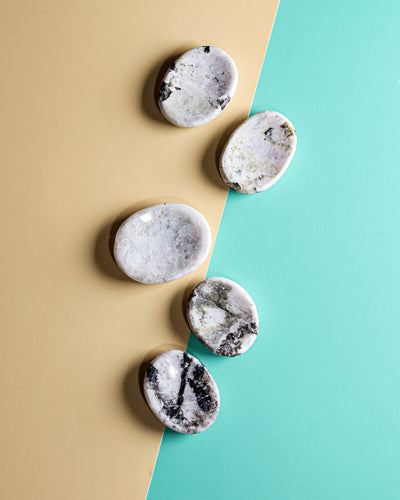
Moonstone is the stone of new beginnings in crystal tradition and is most valued for calming heightened emotions, which makes it good company for the tender, impatient mood of late winter. It also supports Calm & Stress Relief.
Carnelian is a warm orange chalcedony colored by traces of iron, and it is the ember of the group. People have worked it since at least the fourth millennium BCE, in the Indus Valley and predynastic Egypt, and crystal tradition carries it for motivation and the courage to begin. We often suggest it for Confidence & Strength. Keep it out of prolonged direct sunlight, which can fade its color.
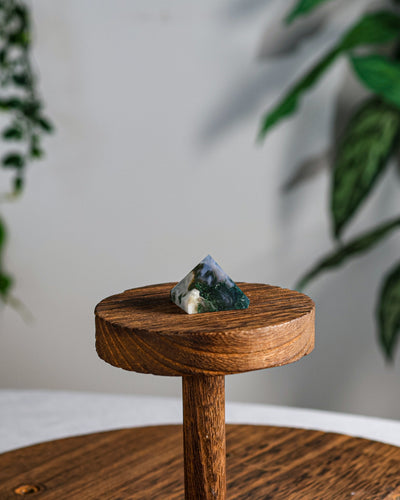
Moss Agate is known as the gardener's stone. Its green threads look like moss caught inside clear stone, though they are iron and manganese minerals rather than plant matter. Growers once hung it on plows and tools to ask for a good harvest, and crystal tradition keeps it as a steady stone of new beginnings that rewards patience over rushing, which makes it the right one to leave beside the flame while your intention takes root.
After Imbolc
Imbolc is a promise rather than a harvest, so nothing needs to be finished by the end of the evening. When the spring equinox arrives in March, take the second slip out from under the Moss Agate and see what has begun to move. Until then, leave the Carnelian where you will see it each morning, as a nudge toward the one small thing you wrote down.