Mica splits into sheets so thin you can read a page through them, and each sheet comes away with a faint silver shine on both of its faces. That habit is the whole character of the stone: it gives something back, and what it gives back is usually a picture of something you had been quietly placing outside yourself. Carried for intuition and clarity, and for the kind of love and relationship work that starts with seeing yourself honestly, Mica is less a stone that tells you things than one that shows you what you already half knew. It is soft, flexible and almost weightless in the hand, and it asks for something like the same qualities from you.
Key Traits
- Splits into flexible, near transparent sheets with a silver pearl shine
- Reflective in both the literal and the psychological sense
- Long associated with angelic contact and awareness of the higher self
- Soft at roughly 2.5 on the Mohs scale, and easily split or marked
- Traditionally held in the hand or placed at the heart and the brow
Intentions
Brief Overview
Mica is not a single mineral but a family of them, a group of sheet silicates that all share one structural trick: their atoms are arranged in layers bonded strongly within each sheet and only weakly between them. The result is perfect cleavage in one direction and nothing much in the others, which is why a piece of Mica peels like paper and bends without breaking. The species usually sold simply as Mica is muscovite, the most common member of the group, and Judy Hall lists it under that name with mica given as its second title. It forms in granite, pegmatite, gneiss and schist, and in pegmatite it can grow enormous. A single muscovite crystal mined near Nellore in India measured three metres by five and weighed eighty five tons.
Properties
What Mica does is reflect. In crystal tradition it is the stone that shows you your own projections, the parts of yourself you have not claimed and therefore keep noticing in other people, and it holds that picture steadily enough that you can look at it without flinching. Alongside that reflective work it stimulates the heart chakra and supports unconditional acceptance, opens intuition and inner sight, and carries an old association with angelic contact and with awareness of the higher self. It is also a stone of flexibility. It eases nervous tension and stored anger, disperses self doubt and insecurity, and helps you look forward and back without dreading either direction.
Metaphysical Properties
- Stimulates the heart chakra and encourages unconditional acceptance, of others and of yourself
- Opens intuition and inner sight, and has long been used as a scrying surface for the same reason a mirror is
- Reflects your projections back to you, so the traits you dislike in other people become recognisable as your own
- Carries a strong traditional association with angelic contact and awareness of the higher self
- Eases nervous tension and stored anger, bringing flexibility to how you hold yourself and how you respond
Physical Properties
- Type: Phyllosilicate of the mica group, most commonly the species muscovite
- Color: Silver grey and colourless most often, also pink, brown, green, violet, yellow, red and white
- Luster: Pearly to vitreous, silky across a freshly split cleavage face
- Structure: Monoclinic, in stacked pseudo hexagonal plates known as books
Meaning & Energy
The meaning of Mica sits in its structure. A stone built from layers that slide is a stone about perspective, about how the same thing looks different depending on which sheet you are reading it through. Judy Hall describes it as a mystical stone with strong angelic links, used for scrying and for connecting with higher spiritual planes, and in the same breath as a mirror that lets you recognise the parts of yourself you had been seeing out in the world. Those two descriptions belong together. Looking up and looking honestly at yourself turn out to be the same movement, and Mica is the stone that makes the second one bearable by keeping it gentle.
Emotions
If you have been surprised by your own reactions lately, this is the stone for that. Mica works on insecurity, self doubt and the awkward, clumsy feeling of not quite fitting the room you are in, and it does it by letting you see yourself the way other people see you rather than the way you fear you appear. It supports you while you look at painful feelings instead of around them, and it takes the edge off nervous tension and the anger you have been carrying without naming. What most people notice is not a lift but a loosening. You become slightly more flexible with yourself, and then, usually, with everyone else.
Crystal Pairings
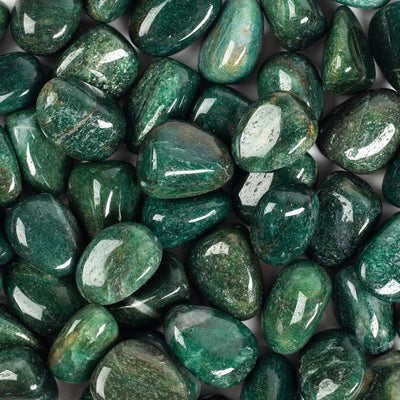
- Fuchsite – The green, chromium rich form of the same mineral, and the one to reach for when the self acceptance work needs a gentler, more nurturing hand
- Lepidolite – A lithium mica from the same family, carried for calm when the nervous tension Mica surfaces needs somewhere to settle
- Clear Quartz – Sharpens and holds the clarity Mica opens up, so an honest insight does not fade by the afternoon
- Selenite – Another soft, sheeted mineral, paired here for the fine, quiet attunement work and for cleansing Mica without water
Science & Origin
Mica is a group of phyllosilicates, or sheet silicates, defined by a layered atomic structure that cleaves perfectly in one plane. Muscovite, the most common member and the species normally traded as Mica, is a potassium aluminium silicate that crystallises in the monoclinic system and grows as stacked pseudo hexagonal plates called books. Its low iron content makes it an excellent electrical and thermal insulator, which is why sheet mica still lines stove windows and turns up inside electronics.
- Also Known As: Muscovite, White Mica, Potash Mica, Muscovy Glass, Isinglass
- Formation: Grows in granites, pegmatites, gneisses and schists, and also as a secondary mineral where feldspar, topaz or kyanite have altered. The largest sheets come from pegmatite, where slow cooling in a fluid rich pocket lets single books grow to metres across
- First Discovery: Known and traded long before it was named. Split sheets glazed Russian windows as Muscovy glass, described in English by George Turberville in 1568, and the mineral name muscovite was in common use by 1794. Principal sources today include India, Brazil, Russia and the United States, with the material Judy Hall lists also coming from Switzerland, Austria and the Czech Republic
- Safety Note: Soft and perfectly cleavable, so it splits, flakes and scratches very easily. Keep it dry, keep it out of salt and ultrasonic cleaners, and do not sand, grind or breathe the dust
Ancient Myths
- Between roughly 100 BCE and 400 CE, Hopewell craftworkers in the Ohio valley cut sheet mica into raptor talons, human hands and large discs, carrying the raw material more than four hundred miles from the Blue Ridge Mountains of North Carolina. At the Mound City Group a clay basin was found lined entirely with mica plates six to sixteen inches across, holding cremated remains, and the mound has been called the Mica Mound ever since.
- In medieval and early modern Russia, split mica sheets glazed windows in place of glass, and the trade carried the material west under the name Muscovy glass. George Turberville, secretary to England's ambassador at the court of Ivan the Terrible, described it in letters home in 1568, and by 1794 the English name for the mineral itself, muscovite, was in common use.
- By the eighteenth century English speakers were also calling sheet mica isinglass, a name borrowed from the gelatine made from sturgeon bladders. Because it stays clear and does not crack in heat, isinglass went on to glaze lantern panes and the doors of coal and wood stoves, and replacement mica sheets are still cut and sold for antique stoves today.
Chakras Table
| Chakra | Connection | Healing Focus | Energy Type |
|---|---|---|---|
| Heart | The placement Judy Hall gives it first, and the one the stone is most often worked with | Unconditional acceptance, including of yourself | Softening |
| Third Eye | Opens intuition and inner sight, and supports the reflective work of recognising your own projections | Honest self perception, quiet inner vision | Revealing |
| Crown | Traditionally linked with angelic contact and awareness of the higher self, most strongly in the violet material | Fine, unhurried attunement | Elevating |
Planets Table
| Planet | Influence | Energy |
|---|---|---|
| Mercury | Wit, problem solving and clear expression | Quick and articulate |
| Neptune | Vision, subtle perception and angelic contact | Dissolving and receptive |
Zodiacs Table
| Zodiac | Attribute | Benefit |
|---|---|---|
| Gemini | Quick, verbal and mentally restless | Sharpens wit and helps thoughts and feelings come out clearly rather than tangled |
| Aquarius | Observant and slightly outside the room | Turns that detachment inward so self observation becomes useful rather than cold |
| Pisces | Porous, dreaming and easily flooded | Supports intuition and inner sight while keeping some structure under the softness |
Elements Table
| Element | Power | Aspect |
|---|---|---|
| Air | Thought, language and mental flexibility | The clear, quick, expressive side of the stone |
| Earth | Rock, pressure and the settling of tension | The steadying side, and its old use in easing the strain held in the ground |
Sacred Numbers Table
| Number | Vibration | Meaning |
|---|---|---|
| 2 | Reflection and pairing | The number of the mirror. Two of anything means comparison, and Mica is the stone of seeing yourself alongside your own reflection |
| 7 | Inner seeing and contemplation | The seeker's number, matching the stone's long use as a scrying surface and a meditation aid |
Color Variations
- Silver grey and colourless: the common material, and the one that reads most clearly as a mirror. This is what most Mica in a shop will be
- Pink: in crystal tradition the pink material is the one named for angelic contact, and it is the softest in feel as well as in colour
- Violet: traditionally linked with the higher crown and with a very fine, unhurried quality of attention
- Green and brown: green comes from chromium and is sold separately as Fuchsite, while iron rich brown and bronze sheets belong to the darker micas alongside muscovite
Mohs Scale Hardness
Mica sits at about 2.5 on the Mohs scale, but the single number hides the more useful fact. Measured flat against a cleavage face it is softer still, closer to 2, and a fingernail will mark it. Measured across the sheets, edge on, it behaves more like a 4. In practice that means a Mica plate is remarkably tough to snap and remarkably easy to ruin: it bends where a harder stone would break, and it scratches, splits and delaminates where almost nothing else would. Treat it as one of the softest things you own, keep it away from your quartz and your agate, and never test it with a fingernail to see whether the number is true.
Chemical Formula
The formula for muscovite, the species most often sold as Mica, is KAl2(AlSi3O10)(OH,F)2.
- K, potassium: sits between the silicate sheets as the weakly held ion that lets them separate
- Al, aluminium: occupies both the octahedral layer and part of the tetrahedral sheet
- Si, silicon: forms the tetrahedral framework that gives the sheets their strength
- O, oxygen: the linking element throughout, and the bulk of the structure by volume
- OH and F, hydroxyl and fluorine: sit at the centre of the sheet rings, with fluorine substituting for hydroxyl in varying amounts
Summary of Composition
- Mineral Class: Silicate, phyllosilicate subclass, mica group
- Crystal System: Monoclinic
- Transparency: Transparent to translucent, transparent in thin sheets
- Luster: Pearly to vitreous, silky on split cleavage faces
Care Instructions
- Keep it dry. Water works into the cleavage planes and lifts the sheets apart, so no soaking, no salt water and no ultrasonic or steam cleaning
- Cleanse it with smoke, sound, moonlight or a night beside Selenite rather than anything wet or abrasive
- Store it flat and on its own, away from harder stones. At about 2.5 on the Mohs scale almost everything in the drawer will scratch it
- Handle books and plates by the edges and never try to peel a sheet with a fingernail. Do not sand or grind it, and keep the dust away from your face
Final Summary
Mica is the quietest kind of useful. It does not push, it does not announce itself, and it will not survive being treated roughly, which is fitting for a stone whose work is showing you something you would rather not look at directly. Keep a plate of it somewhere you will pick it up without deciding to, and let it do what its structure has always done, which is to separate one thin layer at a time until you can see through.