Love that goes quiet rarely goes loudly. It thins: a partnership running on logistics, a friendship you keep meaning to call, a version of yourself you have stopped being patient with. Emerald is the stone traditionally handed to exactly that problem, a green beryl of infinite patience long called the stone of successful love, worked for loyalty in close relationships and for the mental clarity that lets you see one honestly. It does not manufacture feeling. It supports the part of you that is willing to stay and to look straight at what is there.
Key Traits
- Green gem beryl, colored by trace chromium and vanadium
- Traditionally the stone of loyalty, partnership and successful love
- Calming to the emotions rather than stimulating
- Associated with memory, discernment and eloquent speech
- Almost always internally included; toughness is modest despite real hardness
Intentions
Brief Overview
Emerald is the green variety of beryl, the same mineral family that gives us aquamarine and morganite, separated from its siblings by a few thousandths of a percent of chromium. It has been mined since antiquity, first in the Egyptian desert and later, at far greater quality, in the Colombian Andes. In the lapidary traditions of both worlds it carried the same reputation: a stone of steady affection, sound judgment and long patience, given to people who needed to hold something together rather than start something new.
Properties
Emerald works on the heart without agitating it. Where some green stones push growth, emerald steadies what already exists, reinforcing unity, unconditional regard and the ordinary loyalty that keeps a relationship intact through unglamorous stretches. Alongside that it sharpens the mind: memory, discernment, the ability to say a difficult thing well. Traditionally it was also considered a stone of regeneration, called on during recovery from illness, exhaustion or a period that took more out of you than you admitted at the time.
Metaphysical Properties
- Supports loyalty, partnership and unconditional regard within existing relationships
- Steadies the emotions and eases the low-grade tension of feeling unsettled
- Strengthens memory, discernment and clear articulation of what you mean
- Encourages recovery and renewal after depletion or a difficult season
- Brings unconscious knowing to the surface, particularly within a group
Physical Properties
- Type – Gem variety of beryl, a beryllium aluminium cyclosilicate
- Color – Green to bluish green, from pale to deeply saturated, colored by chromium and vanadium
- Luster – Vitreous
- Structure – Hexagonal, forming six-sided prismatic crystals
Meaning & Energy
The character of emerald is patience with substance behind it. It is not a soothing stone in the sense of dulling things down; it holds a position. In practice that reads as the steadiness required to stay honest inside a relationship you care about, and the composure required to hear something true about yourself without flinching. Classical sources tied it to prophecy and protection from enchantment, which is a mythic way of naming something practical: emerald is associated with not being fooled, including by your own preferred version of events.
Emotions
If you have been carrying more than you have said out loud, emerald meets you there. It supports you when your patience has run short with someone you love, when resentment has quietly replaced conversation, or when a stretch of illness or grief has left you flatter than you expected to be. Rather than lifting your mood on demand, it helps you tolerate the middle of things: the part where nothing is resolved yet and you have to keep showing up anyway. Many people find it easier to speak clearly, and more willing to listen, while wearing it.
Crystal Pairings
- Rose Quartz – Softens the approach when emerald's honesty needs a gentler delivery
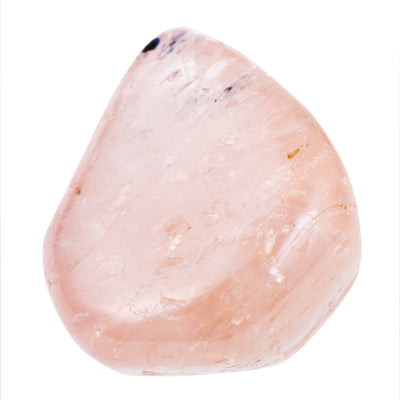
- Morganite – A beryl sibling for compassion toward yourself, not only toward others
- Green Aventurine – Turns emotional steadiness outward into opportunity and new ground
- Lapis Lazuli – Reinforces truthful, well-chosen speech when a hard conversation is due
Science & Origin
Emerald exists because of an improbable meeting. Beryllium concentrates in granite pegmatites; chromium and vanadium belong to dark ultramafic and carbon-rich rocks. Hot circulating fluids have to force the two together, which they do most often along the contact between a pegmatite or quartz vein and a mica schist. Colombia is the celebrated exception, where emeralds crystallized in calcite veins cutting black shale, producing the warm saturated green of Muzo and Chivor.
- Also Known As – Green beryl, smaragdus, panna
- Formation – Hydrothermal growth at pegmatite and schist contacts, or in calcite veins within black carbonaceous shale
- First Discovery – Wadi Sikait, Egypt, known to the Romans as Mons Smaragdus; workings securely dated to the late Ptolemaic period, roughly the 3rd to 1st century BCE, with most activity Roman and Byzantine
- Safety Note – Beryl contains beryllium. Polished stones are safe to handle and wear, but never cut, grind or sand emerald without proper dust control, and do not make direct-contact elixirs. Most emeralds are fracture-filled with oil or resin, so avoid ultrasonic cleaners, steam, heat and harsh chemicals.
Ancient Myths
- The oldest known emerald workings lie at Wadi Sikait in Egypt's Eastern Desert, which the Romans named Mons Smaragdus, the Emerald Mountain. Green was the color of renewal along the flooding Nile, and emeralds were placed with the dead as a token of continuing life.
- Pliny the Elder wrote in his Natural History that no green ran deeper, and that gem cutters rested their strained eyes by looking at emerald. From this the stone became the classical emblem of restored sight, literal and otherwise.
- European lapidary tradition held that emerald guarded its wearer against the spells and enchantments of magicians and offered glimpses of what was coming. A stone that changed color on the hand was read as a warning of a lover's infidelity.
Chakras Table
| Chakra | Connection | Healing Focus | Energy Type |
|---|---|---|---|
| Heart | Primary | Loyalty, partnership, emotional balance and recovery | Steadying and restorative |
| Third Eye | Secondary | Memory, discernment, seeing a situation as it actually is | Clarifying and observant |
Planets Table
| Planet | Influence | Energy |
|---|---|---|
| Venus | Affection, loyalty, the value placed on a bond | Warm and cohesive |
| Mercury | Memory, articulate speech, sound judgment | Sharp and communicative |
Zodiacs Table
| Zodiac | Attribute | Benefit |
|---|---|---|
| Taurus | Constancy | Rewards the Taurean instinct to stay, without letting it harden into stubbornness |
| Cancer | Devotion | Steadies deep feeling so care does not tip into anxiety |
| Libra | Balance | Supports fair, clear-eyed negotiation inside a relationship |
Elements Table
| Element | Power | Aspect |
|---|---|---|
| Earth | Endurance | Growth that holds its shape over long stretches of time |
| Water | Feeling | Emotional flow that settles rather than floods |
Sacred Numbers Table
| Number | Vibration | Meaning |
|---|---|---|
| 4 | Structure | The foundation under a commitment, built slowly and meant to hold |
| 6 | Harmony | Care for others, domestic steadiness, the Venusian pull toward union |
Color Variations
- Colombian green – Warm, glowing bluish green to pure green with a soft internal light, from the Muzo and Chivor mines; the benchmark the trade still measures against
- Zambian green – Cooler and bluer from higher iron content, frequently cleaner and more transparent than Colombian material
- Sandawana and Brazilian green – Zimbabwean Sandawana crystals are small but intensely saturated; Brazilian stones tend lighter, sometimes leaning yellowish green
- Included and opaque emerald – Milky, heavily veiled or matrix-bound rough, including rare trapiche crystals with a six-spoked dark pattern; Judy Hall notes opaque emerald is less suited to mental attunement work
Mohs Scale Hardness
Emerald measures 7.5 to 8 on the Mohs scale, hard enough to resist everyday scratching from dust and most household surfaces. Hardness and toughness are not the same thing, though, and this is the stone where that distinction matters most: the internal veils and healed fissures that make each emerald individual also make it brittle, so a knock against a doorframe does more damage than a hard gem of the same rating would suffer. Treat it as durable to wear and fragile to impact.
Chemical Formula
Emerald is beryl, Be3Al2Si6O18, written in older references as Be3Al2(SiO3)6. The formula itself contains nothing green; the color comes entirely from trace elements that do not appear in it.
- Beryllium (Be) – Three atoms; a genuinely rare light metal, and the reason emerald deposits are scarce
- Aluminium (Al) – Two atoms, occupying the sites where chromium or vanadium substitutes in
- Silicon and Oxygen (Si, O) – Six silicate tetrahedra linked into stacked six-membered rings, which classifies beryl as a cyclosilicate
- Chromium and vanadium (trace) – Present in thousandths of a percent, and solely responsible for the green; iron shifts the hue bluer
Summary of Composition
- Mineral Class – Silicate, cyclosilicate group (beryl)
- Crystal System – Hexagonal
- Transparency – Transparent to opaque, most commonly translucent with visible inclusions
- Luster – Vitreous
Care Instructions
- Clean with lukewarm water, a soft cloth and mild soap only; never use ultrasonic or steam cleaners, which can strip clarity-enhancing oils and open existing fissures
- Keep away from heat, sudden temperature changes, acetone, bleach and chlorinated water
- Store separately in a soft pouch, since quartz, topaz and most beads will scratch the polish and knocks find the fractures first
- Refresh it in moonlight or on dry selenite rather than in salt water, and avoid long soaks of any kind
Final Summary
Emerald is a stone for the long middle of things, for the relationship worth repairing and the recovery that takes longer than you planned. Its green comes from an accident of geology so unlikely it borders on improbable, and the stone has been asked, for three thousand years, to hold the equally improbable thing: two people staying honest with each other over time. Wear it when you want to stay, and want to see clearly while you do.