There are days when your mind moves faster than your body can follow. You may wake up already thinking ahead, carry other people’s emotions without meaning to, or feel as though your energy is scattered across too many places at once. In moments like these, grounding is not about becoming heavy or rigid. It is about returning to yourself. It is the gentle practice of coming back into your body, your breath, your space, and the present moment.
Grounding often sounds like something that requires a full ritual, a long meditation, or a perfectly quiet environment. In reality, one of the most supportive shifts is much simpler. It begins when you intentionally pause and reconnect with the physical world around you. A hand on your heart. Both feet on the floor. A conscious breath before answering a message. A crystal held in your palm while you return to your center. These small moments can create a subtle but meaningful shift that helps everything feel more steady.
When grounding becomes part of your daily rhythm, it can soften overwhelm, restore clarity, and help you move through the day with more presence. It does not need to be dramatic to be effective. The most lasting spiritual practices are often the ones that are simple enough to return to again and again.
Spiritual Context
Grounding is the practice of anchoring your energy so you can remain present, steady, and connected while moving through daily life. Spiritually, grounding supports the relationship between your inner world and your lived experience. It helps bridge intuition with action. Rather than floating in thought, worry, or emotional noise, grounding invites you to inhabit your life more fully.
Many people begin seeking grounding when they feel overstimulated, emotionally porous, distracted, or disconnected from their own needs. This can happen during busy seasons, times of stress, spiritual awakening, travel, grief, major life transitions, or even after spending long stretches online. Energy can become diffuse very quickly in the modern world. Grounding helps gather it back.
There is also a misconception that grounding dulls spiritual sensitivity. In truth, grounding strengthens it. When your energy is rooted, your intuition often becomes clearer because it is no longer competing with as much internal static. Grounding can help you discern what is yours, what is passing through, and what actually needs your attention. It creates stability without shutting down openness.
At its heart, grounding is a relationship with the body and the Earth. It is a remembrance that your spiritual life is not separate from the physical world. The body is not an obstacle to inner wisdom. It is one of the clearest pathways to it. A grounded day often begins with simple acts of belonging: noticing your breath, drinking water with intention, touching stone, standing still for a few extra seconds, and remembering that you are here.
Crystal Support
Crystals can be beautiful companions for grounding because they give the mind and body something tangible to return to. Their weight, texture, temperature, and symbolism all help bring awareness back into the present. Some grounding stones offer strong energetic boundaries, while others soothe the nervous system, strengthen emotional steadiness, or reconnect you with the calm rhythm of nature.
Below are several crystals that can support a more grounded day in different ways.
| Crystal | Why it supports this topic | Best for |
|---|---|---|
| Black Tourmaline | Offers strong protective energy and helps absorb scattered or heavy energetic buildup | Busy days, crowded spaces, energetic boundaries |
| Smoky Quartz | Gently transmutes stress and helps bring awareness back into the body | Emotional overwhelm, resetting after tension |
| Hematite | Supports focus, steadiness, and a sense of energetic containment | Mental clarity, work routines, staying present |
| Red Jasper | Encourages stamina, rootedness, and calm strength | Daily resilience, steady momentum, grounding rituals |
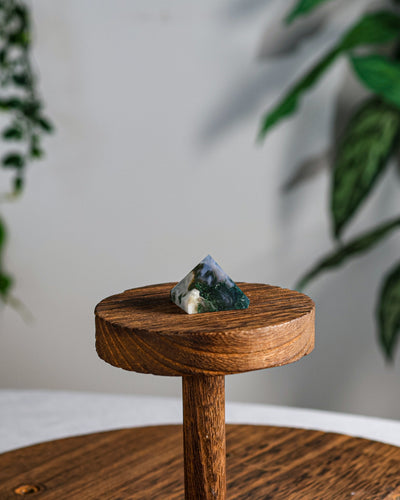
| Moss Agate | Reconnects the spirit with nature and a slower internal rhythm | Gentle grounding, emotional balance, home rituals |
| Petrified Wood | Carries ancient, stabilizing energy that supports patience and perspective | Life transitions, slowing down, long-term grounding |
These stones do not need to be used all at once. In fact, grounding often becomes more effective when your practice stays simple. One crystal in your pocket, one on your desk, or one placed near the doorway can be enough to create an anchor point in your day. The purpose is not to perform grounding perfectly. It is to create a moment of return.
Black Tourmaline is especially supportive if you tend to feel energetically affected by your environment. It can help create a sense of separation between your own energy and the emotional noise around you. Smoky Quartz is useful when your energy feels frayed or overloaded, especially after difficult conversations or long stretches of stress. Hematite is often helpful for people who feel mentally ungrounded because it brings attention toward the body and can support practical focus. Red Jasper offers a warmer kind of steadiness, one that feels quietly strengthening rather than forceful. Moss Agate and Petrified Wood are both beautiful for those who want grounding to feel nurturing, natural, and slow.
A Simple Daily Grounding Practice
The simplest way to feel more grounded throughout your day is to create one repeatable moment of physical return. This can take less than two minutes. What matters most is consistency. When repeated regularly, a small grounding practice teaches your body how to recognize safety, presence, and steadiness more quickly.
Below is a simple rhythm you can return to morning, midday, or anytime your energy begins to feel scattered.
Step 1: Pause Where You Are
Before you reach for your phone, answer a message, or move to the next task, pause. Let yourself arrive in the moment you are already in. If possible, stand or sit with both feet touching the floor. Hold a grounding crystal if one is nearby.
You do not need to empty your mind. You are only interrupting momentum long enough to come back to yourself.
Step 2: Breathe Downward
Take one slow inhale and imagine the breath moving all the way down through your body. Then exhale slowly and soften your shoulders, jaw, and belly. Repeat this three times.
Many people try to ground by thinking their way into calm. Breath works differently. It invites the body to participate. A downward breath can help shift energy from racing thoughts into a more stable embodied awareness.
Step 3: Name What Is Real
Look around and quietly name three things that are physically true in the present moment. For example: my feet are on the floor, the chair is supporting me, the air feels cool, my crystal feels smooth in my hand.
This simple step is powerful because it moves attention away from spiraling thought and back into lived experience. Grounding becomes stronger when you witness what is actually here.
Step 4: Choose One Clear Intention
Ask yourself, what is the next grounded thing I can do? Keep the answer small. Drink water. Finish one task. Step outside. Speak more slowly. Light a candle before beginning work. Put your phone down for five minutes.
Grounding is not only a feeling. It is also a way of moving. A clear, simple next step helps anchor your energy into action.
Step 5: Return to Your Anchor
Throughout the day, revisit the same anchor. Touch your crystal. Feel both feet on the ground. Take one deeper breath before opening a door, starting the car, or sitting down at your desk. The repetition matters. It teaches your system that steadiness is available more often than you think.
Simple Rituals for Emotional Grounding
A grounding practice becomes even more supportive when it is woven into ordinary moments. These rituals are intentionally simple so they can become part of real life rather than something reserved for ideal conditions.
Morning Centering Practice
Begin the day by holding a grounding crystal for one minute before doing anything else. Sit at the edge of your bed or stand by a window. Place one hand over your heart, one hand around the stone, and ask yourself how you want to move through the day. Not what you want to accomplish, but how you want to feel.
A crystal like Red Jasper or Hematite can be especially supportive here. Let the ritual be brief and sincere. This is enough to set a steadier tone for the hours ahead.
Create a Calm Corner
Choose one small area in your home to hold grounding energy. This could be a nightstand, desk corner, shelf, or entryway table. Place one or two grounding crystals there along with an object that helps you exhale when you see it, such as a candle, a bowl, a small cloth, or a natural element from outside.
This space does not need to be elaborate. Its purpose is to give your nervous system and your spirit a place of recognition. Over time, simply pausing there can become a signal that you are returning to yourself.
Five-Minute Emotional Reset
When the day feels heavy, take five minutes to reset rather than pushing through without awareness. Hold Smoky Quartz or Black Tourmaline, sit with both feet planted, and breathe slowly. As you exhale, imagine releasing what is not yours to carry. Let your attention settle lower in the body, toward the hips, legs, and feet.
This practice can be especially supportive after emotionally charged conversations, overstimulating errands, or long periods of screen time.
Grounding Through Nature Contact
Even brief contact with the natural world can restore steadiness. Step outside with Moss Agate or Petrified Wood and stand in fresh air for a few minutes. Notice the sky, a tree, the movement of wind, or the shape of the ground beneath you. Nature does not rush to regulate itself, and spending a few conscious moments with that rhythm can help your own energy settle.
Grounding does not always require silence. It requires relationship. Nature reminds the body what balance feels like.
Related Crystals
If you want to deepen a grounding practice, a few complementary stones can offer additional support. Some help build courage and inner steadiness, while others strengthen endurance or bring a more rooted connection to the body.
Final Reflection
There is a quiet kind of power in choosing steadiness. Not the kind that forces control, but the kind that helps you remain present with yourself as the day unfolds. Grounding does not ask you to become someone different. It simply invites you to come back to where you already are.
The subtle shift that helps everything feel more steady is often this: pause, return to the body, and choose one grounded action. Again and again. Over time, these small moments begin to change the texture of the day. You may notice more clarity in your decisions, more space in your breath, and a stronger sense of what belongs to you.
Let grounding be simple. Let it be kind. Let it be something you can actually return to. One breath, one stone, one moment of presence at a time.