Spiny Oyster arrives already carrying a history. Divers have been bringing this banded red and orange shell up off the floor of the Sea of Cortez for thousands of years, and for most of that time it was worth more than gold to the people who traded for it. What Spiny Oyster offers now is close to what it offered then, grounding and stability in the body and a warm, unhurried kind of confidence and strength that does not need an audience. Hold a polished piece and the weight is modest, but the color reads to the eye as heat.
Key Traits
- Banded red, orange, purple and white shell hand gathered from the Sea of Cortez
- Organic gem material rather than a mineral, built from calcium carbonate around protein
- Mohs 3.5, soft enough that it asks for deliberate handling
- Carried along American trade routes for more than four thousand years
- Warm, steady energy that settles into the body before it reaches the head
Intentions
Brief Overview
Spiny Oyster is the shell of a thorny bivalve in the genus Spondylus, closer kin to the scallop than to any true oyster. It grows in warm Pacific water from Baja California down to Peru, armored with long curving spines and lined on the inside with the deep red, orange or purple that jewelers cut for. Because it is animal rather than mineral, its structure is a composite of calcite, aragonite and conchiolin protein, which is why it takes a soft luster and why it will not survive the treatment a quartz would shrug off. In the Andes it was called mullu and traded above gold. In the American Southwest it traveled inland from the Gulf of California and settled permanently into Pueblo and Navajo silverwork, where it still sits beside turquoise today.
Properties
Spiny Oyster works low and warm. It steadies rather than stimulates, drawing attention down out of a spinning head and back into the feet, the breath and the hands. Where a grounding stone can feel heavy or inert, this one carries color and heat with it, so the steadiness it offers has some vitality in it. Traditionally it is a stone of provision, associated with rain, harvest and honest exchange, which gives it an unusual double register: it anchors you and it keeps you interested in what you are building.
Metaphysical Properties
- Anchors restless or scattered energy back into the body without dulling it
- Supports a warm, durable form of courage that outlasts a surge of motivation
- Long associated in trade tradition with provision, fair exchange and the arrival of what was worked for
- Encourages creative drive to move from the head into actual making
- Connects the wearer to ancestral and inherited craft, useful when working with lineage or family material
Physical Properties
- Type: Organic gem material, shell of the bivalve genus Spondylus
- Color: Deep red, red orange, orange, purple and white, often banded
- Luster: Greasy to pearly
- Structure: Fibrous growth layers of calcite and aragonite bound by conchiolin
Meaning & Energy
The meaning of Spiny Oyster is bound up with what people were willing to do to get it. Nobody dives fifty meters on a held breath for something ordinary. Andean peoples called it the daughter of the sea and the mother of all waters, laid it in springs so the water would keep coming and buried it in fields so the harvest would arrive. That is the energy the shell still carries: not sudden fortune but provision, the sense that what you tend will feed you. Its red is the red of ochre and clay rather than flame, which is why it grounds where a brighter red stone would push.
Emotions
If your nerves live in your chest and your focus keeps drifting upward, Spiny Oyster gives you somewhere to put yourself. It is a good companion on the days when you feel both wired and depleted, when your energy is moving fast but not going anywhere useful. Wearing it tends to slow the pace of your attention rather than flatten your mood, so you stay warm and interested while you settle. It also eases the particular ache of feeling unvalued, quietly reminding you that worth is not the same as recognition.
Crystal Pairings
- Turquoise – the traditional counterpart in Southwestern silverwork, adding protection and clear speech to Spiny Oyster's warmth
- Carnelian – sharpens the creative drive that Spiny Oyster warms, turning steady heat into actual momentum
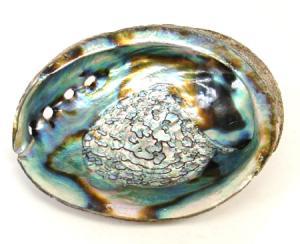
- Abalone Shell – another sea-born material, softening the emotional edges where Spiny Oyster works on the body
- Red Jasper – deepens the grounding, giving stamina to a stone already built for endurance
Science & Origin
Spondylus is a bivalve mollusk, more closely related to the scallop than to any true oyster, named for the long curving spines that armor its outer valve. Two Pacific species carry the jewelry trade. Spondylus princeps is banded deep red and orange, heavily spined, and lives roughly fifteen to fifty meters down. Spondylus calcifer grows larger with shorter spines and runs orange into purple, preferring shallow rocky ground at five to ten meters. Both are still gathered by hand by divers working the same waters their predecessors did.
- Also Known As: Spondylus, Thorny Oyster, Spiny Oyster Shell, Mullu, red gold
- Formation: Biomineral rather than rock. The mollusk secretes calcium carbonate as interlocking calcite and aragonite layers around conchiolin, a structural protein, building the valve outward in fibrous growth bands. Pigment concentrated in the outer layers produces the red, orange and purple that jewelers cut for.
- First Discovery: Worked by the Valdivia culture of coastal Ecuador as early as the third millennium BCE, with sustained ceremonial use from about 2500 BCE to 1500 CE. The genus Spondylus was formally described by Linnaeus in 1758.
- Safety Note: At Mohs 3.5 this is soft organic material. Keep it clear of acids, household cleaners, perfume and hairspray, never put it through an ultrasonic or steam cleaner, and avoid sudden temperature swings. Do not soak it in salt or salt water and do not use it in elixirs or anything meant to be swallowed.
Ancient Myths
- Andean peoples called the shell mullu and named it the daughter of the sea and the mother of all waters. Shells were laid in springs and wells to keep the water coming and buried in fields to bring a full harvest.
- Under the Inca the shell was valued above gold and became known as red gold, held largely by elites and ritual specialists. Spanish accounts from 1525 describe traders exchanging quantities of gold, silver and emeralds for it.
- In the North American Southwest the same shell moved inland from the Gulf of California along Hohokam trade routes, was set in mosaic beside turquoise by Ancestral Puebloan artisans, and is still cut and strung today at Santo Domingo Pueblo, also called Kewa.
Chakras Table
| Chakra | Connection | Healing Focus | Energy Type |
|---|---|---|---|
| Root | Anchors attention into the legs, feet and lower body | Steadying a nervous system that will not settle | Dense and warm |
| Sacral | Meets the shell's red orange coloring and its association with provision | Restoring appetite for creative work and pleasure | Fluid and generative |
Planets Table
| Planet | Influence | Energy |
|---|---|---|
| Mars | Courage carried in the body rather than performed | Warm and durable |
| Moon | The tides and the marine origin of the shell itself | Cyclical and receptive |
Zodiacs Table
| Zodiac | Attribute | Benefit |
|---|---|---|
| Aries | Direct, physical courage | Gives Aries drive something steady to push against instead of burning through it |
| Cancer | Protection, home and the sea | Offers Cancer a shell of its own, supporting security without withdrawal |
Elements Table
| Element | Power | Aspect |
|---|---|---|
| Earth | Mineral body and grounding weight | Stability and provision |
| Water | Marine origin and tidal association | Emotional flow and receptivity |
Sacred Numbers Table
| Number | Vibration | Meaning |
|---|---|---|
| 2 | Partnership and the paired halves of the bivalve | Cooperation, balance and reciprocal exchange |
| 8 | Material return on sustained effort | Abundance earned through steady, repeated work |
Color Variations
- Deep red: the most sought after grade, associated with Spondylus princeps and the classic Southwestern setting
- Red orange: bright and warm, often showing banding where the pigment thins toward the shell edge
- Purple: typical of Spondylus calcifer, ranging from soft lilac to a saturated aubergine
- White and bicolor: pale zones and sharp red to white boundaries, cut deliberately so the banding becomes the design
Mohs Scale Hardness
Spiny Oyster sits at about 3.5 on the Mohs scale, roughly the hardness of a copper coin and softer than almost anything else in a jewelry box. In practice this means it scratches easily, will not tolerate being tumbled loose with harder stones, and dissolves in acid because it is calcium carbonate. Store it separately, take rings off before anything abrasive, and treat a polished surface as something worth protecting rather than something that will look after itself.
Chemical Formula
The shell is calcium carbonate, CaCO3, deposited biologically as both calcite and aragonite and bound together by conchiolin, an organic protein. It is a composite rather than a single mineral phase, which is why it behaves differently from a geological carbonate of the same formula.
- Calcium (Ca): the metal at the core of the carbonate framework, giving the shell its structural body
- Carbon (C): bonded with oxygen to form the carbonate group that builds each layer
- Oxygen (O): three atoms per carbonate group, completing the mineral lattice
- Conchiolin: a non-mineral structural protein that binds the carbonate layers and gives the shell its toughness and its organic sheen
Summary of Composition
- Mineral Class: Organic gem material, biogenic carbonate, not a mineral species in its own right
- Crystal System: Trigonal in the calcite layers and orthorhombic in the aragonite layers, arranged in fibrous biological growth bands
- Transparency: Opaque
- Luster: Greasy to pearly
Care Instructions
- Wipe with a soft dry or barely damp cloth and dry it immediately, with no soaps, solvents or commercial jewelry dips
- Put jewelry on last, after perfume, hairspray, sunscreen and lotion have dried
- Store it apart from harder stones in a soft pouch, since almost everything in the box can scratch it
- Cleanse energetically with sound, smoke or moonlight only, never salt, salt water or prolonged direct sun
Final Summary
Spiny Oyster is a working material with a long memory. It grounds without going cold, carries warmth without burning through it, and comes from a lineage of people who valued it above metal because it stood for water, harvest and fair return. Wear it when you want your courage to have somewhere solid to stand.