Copper doesn't hold energy so much as move it, this warm, reddish-orange metal has been prized as a conductor since before recorded history, and crystal workers still treat it that way today. Reached for in prosperity and opportunity work and gentler, Venus-ruled love and relationships intentions, copper is less a stone with its own fixed message and more an amplifier for whatever intention you pair it with. It's the connective tissue of a crystal collection, not the centerpiece.
Key Traits
- Reddish-orange native metal, one of the first metals ever worked
- Exceptional electrical and thermal conductor
- Long associated with Venus and the heart
- Naturally develops a patina over time
- Soft, malleable hardness of 2.5–3 on the Mohs scale
Intentions
Brief Overview
Copper is a native metallic element found in masses, nuggets, and occasionally cubic crystals, formed when copper-rich fluids deposit pure metal into volcanic basalt. Michigan's Keweenaw Peninsula produced some of the largest native copper masses ever found, and the metal has been mined and worked continuously since prehistory across Chile, Peru, the Democratic Republic of Congo, and Australia as well.
Properties
Copper is worked with as an amplifier, a way to strengthen the intention of whatever crystal or ritual it's paired with rather than carrying one fixed purpose of its own. Its conductive nature is often used metaphorically to describe how it channels and directs energy in jewelry, grids, and paired-stone work, supporting steady vitality and open communication.
Metaphysical Properties
- Amplifies the energy of paired crystals and intentions
- Channels and directs focused intention
- Supports steady physical and emotional vitality
- Encourages open, warm communication in relationships
- Balances giving and receiving energy
Physical Properties
- Type: Native metallic element
- Color: Reddish-orange, often with green patina
- Luster: Metallic
- Structure: Isometric (cubic), though usually found massive
Meaning & Energy
Copper's meaning is inseparable from its function, it has spent ten thousand years as humanity's go-to conductor, and that reputation carries directly into how it's used metaphysically. It doesn't ask to be the center of attention; it asks to move energy efficiently between two points, which makes it as useful in a crystal grid as it is in an electrical wire.
Emotions
If your relationships feel one-sided or your own energy feels stuck, copper offers a model for better flow. Wear it or keep it nearby as a reminder that giving and receiving are meant to move in both directions, and that steady, warm connection often matters more than intensity.
Crystal Pairings
- Citrine – channels its abundance-focused energy with conductive amplification
- Carnelian – amplifies vitality and creative motivation
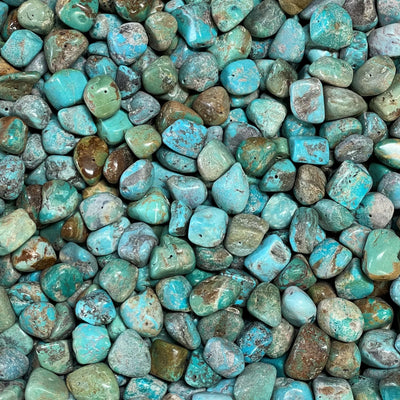
- Turquoise – supports open, honest communication in relationships
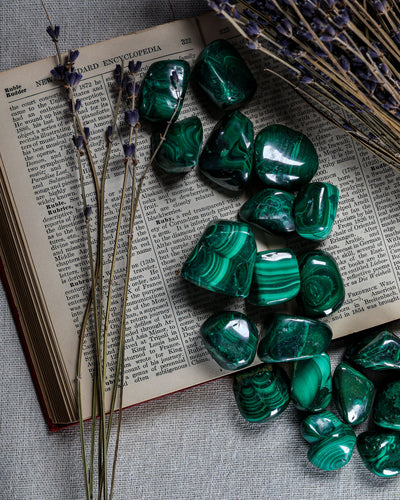
- Malachite – deepens transformative, heart-centered work
Science & Origin
Native copper forms when copper-rich hydrothermal fluids deposit pure metal into cavities and fractures in volcanic basalt. Michigan's Keweenaw Peninsula holds some of the purest and largest native copper deposits on Earth, with additional major sources in Chile, Peru, the Democratic Republic of Congo, and Australia.
- Also Known As: Native Copper
- Formation: Deposited by copper-rich hydrothermal fluids into volcanic basalt cavities and fractures
- First Discovery: Worked by humans for roughly 10,000 years, with major prehistoric mining at Michigan's Keweenaw Peninsula
- Safety Note: Generally safe to handle; a natural patina will develop over time and is not harmful
Ancient Myths
- Copper takes its name from the Latin cuprum, itself derived from "Cyprus," the Mediterranean island the Romans mined heavily for the metal, a naming legacy that has lasted more than two thousand years.
- Ancient Egyptians associated copper with the goddess Hathor and used polished copper mirrors and the ankh symbol, itself sometimes interpreted as a stylized mirror, in rituals tied to life and vitality.
- North America's Old Copper Complex, centered around the Great Lakes, produced tools and ornaments from native copper as early as 6,000 years ago, among the oldest metalworking traditions in the world.
Chakras Table
| Chakra | Connection | Healing Focus | Energy Type |
|---|---|---|---|
| Sacral | Secondary | Restoring steady, creative vitality | Energizing |
| Heart | Primary | Supporting warm, balanced connection | Conductive |
Planets Table
| Planet | Influence | Energy |
|---|---|---|
| Venus | Love, warmth, and balanced exchange | Nurturing |
Zodiacs Table
| Zodiac | Attribute | Benefit |
|---|---|---|
| Taurus | Steady, grounded vitality | Supports consistent, reliable energy flow |
| Libra | Balanced exchange | Encourages fair give-and-take in relationships |
Elements Table
| Element | Power | Aspect |
|---|---|---|
| Fire | Warmth and conductive vitality | Energetic |
| Earth | Grounded, physical resource | Physical |
Sacred Numbers Table
| Number | Vibration | Meaning |
|---|---|---|
| 3 | Expression | Communication, connection, and creative flow |
Color Variations
- Fresh, bright reddish-orange metallic surface
- Naturally darkened brown patina from oxidation
- Green-blue verdigris patina forming over extended exposure
- Rare crystalline copper specimens with a bright, faceted metallic sheen
Mohs Scale Hardness
At 2.5 to 3 on the Mohs scale, copper is soft and malleable, easily scratched or dented, which is part of why it has been shaped into tools, jewelry, and ornaments since prehistory.
Chemical Formula
Copper's chemical identity is elemental: Cu, atomic number 29, occurring in nature in a nearly pure metallic state.
- Cu – Copper, typically 99% or higher purity in native specimens
- Trace Ag – Silver, occasionally present in natural alloy
Summary of Composition
- Mineral Class: Native element (metal)
- Crystal System: Isometric (cubic), though usually found massive
- Transparency: Opaque
- Luster: Metallic
Care Instructions
- Clean with a soft cloth; a light copper polish restores shine if it dulls
- Expect a natural patina to develop over time, this is normal and can be left as-is or gently polished away
- Avoid harsh chemicals and abrasive cleaners, which can pit the soft metal surface
- Store away from moisture to slow the formation of green patina
Final Summary
Copper has been humanity's conductor since before we wrote anything down, and it hasn't stopped, it simply moves whatever energy or intention you hand it. Let it remind you that connection, like electricity, needs a clear path to actually flow.