Serpentine takes its name from a mottled, snakeskin-like pattern that runs through nearly every piece, dark and light green folded together like something still moving. It is a stone used for Grounding & Stability and Intuition & Clarity at once, an unusual pairing that makes sense the moment you hold it: this is a stone that opens awareness upward while keeping your feet planted exactly where they are.
Key Traits
- Grounds meditation and deeper spiritual exploration
- Cleanses and stimulates the crown chakra
- Supports recovery of inner wisdom and past-life reflection
- Helps you feel in command of your own life again
- Directs healing energy consciously toward what needs it
Intentions
Brief Overview
Serpentine is not one mineral but a whole family of related magnesium-iron silicates, formed when olivine-rich rock deep in the earth slowly absorbs water and transforms. The result is a stone that reads as earthy and grounded at first glance, mottled in greens, browns, reds, and blacks, yet has long been used specifically for opening rather than closing spiritual awareness.
Properties
Serpentine is used to steady meditation and spiritual exploration without losing the ground beneath either one. Traditionally it is said to cleanse the chakras while stimulating the crown, opening new pathways for rising kundalini energy, and to help recover wisdom and memory from past lives. Psychologically, it supports a felt sense of being in command of your own life, and helps direct healing attention consciously toward whatever actually needs it.
Metaphysical Properties
- Cleanses the chakras while stimulating the crown
- Opens new pathways for rising kundalini energy
- Supports recovery of wisdom and memory from past lives
- Helps correct mental and emotional imbalance
- Directs healing energy consciously to where it's needed
Physical Properties
- Type: Silicate mineral group (phyllosilicate)
- Color: Mottled green, brown-red, brown-yellow, black-green, or white
- Luster: Waxy to greasy, occasionally silky
- Structure: Monoclinic (most group members)
Meaning & Energy
Serpentine's meaning is carried in its own mottled surface, dark and light patterns folded together the way old memory and present awareness fold together during real inner work. It is a stone that asks you to open upward, toward crown-level awareness and psychic sensitivity, while never letting go of the ground it's rooted in, which is exactly what steady spiritual exploration actually requires.
Emotions
When you feel scattered or like your life is happening to you rather than through you, Serpentine tends to hand back a sense of quiet command. You may notice it working during meditation, when old emotional imbalance softens into something you can direct rather than something that directs you. It supports a settled, grounded kind of emotional control, less about suppressing feeling and more about finally being able to steer it.
Crystal Pairings
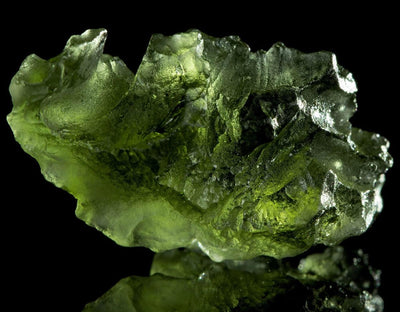
- Moldavite – adds rapid transformation to Serpentine's grounded spiritual opening
- Black Tourmaline – reinforces protection while the crown chakra opens
- Green Aventurine – deepens the heart-centered, growth-oriented side of the stone
- Smoky Quartz – keeps kundalini work anchored firmly in the body
Science & Origin
Serpentine is a well-documented mineral group rather than a single species, named for the mottled, snakeskin pattern common to most of its members. It has been quarried and carved for millennia thanks to a workability that early tools could manage, and it remains a popular material for carving, cabochons, and decorative stone today.
- Also Known As: Infinite Stone (pale green variety), New Jade, Verd Antique
- Formation: Forms through serpentinization, the hydration and chemical alteration of olivine- and pyroxene-rich rock deep within the earth's crust
- First Discovery: Carved and used since antiquity; formally classified as a mineral group in the eighteenth century
- Safety Note: Some serpentine-group minerals can contain fibrous chrysotile, so buy finished, polished, or sealed pieces from a reputable source and avoid grinding or inhaling dust from raw material
Ancient Myths
- The name Serpentine comes from the Latin serpentinus, for its snakeskin-like mottling, and older European mineral lore held that a stone patterned like a serpent could guard the wearer against snakebite by sympathetic likeness.
- Soft enough to work with early tools yet durable once finished, serpentine was carved into seals, amulets, and small ritual objects across Mediterranean and Near Eastern antiquity.
- The pale, light green variety known as Infinite Stone carries its own modern tradition of angelic contact and past-life integration, a crystal-healing association rather than an ancient one, and is named that way here for accuracy.
Chakras Table
| Chakra | Connection | Healing Focus | Energy Type |
|---|---|---|---|
| Root | Grounds meditation and spiritual exploration in the body | Steady, earthed focus | Anchoring |
| Heart | Softens old emotional imbalance into something you can direct | Compassion and self-forgiveness | Softening |
| Crown | Explicitly cleansed and stimulated by this stone in tradition | Opening pathways for rising awareness | Awakening |
Planets Table
| Planet | Influence | Energy |
|---|---|---|
| Saturn | Structure, discipline, and the patience real grounding requires | Stabilizing |
| Pluto | Transformation, past-life work, and rising kundalini energy | Transforming |
Zodiacs Table
| Zodiac | Attribute | Benefit |
|---|---|---|
| Scorpio | Deep transformation | Supports facing what's buried and moving through it |
| Capricorn | Earth-based discipline | Grounds ambition in patient, steady progress |
Elements Table
| Element | Power | Aspect |
|---|---|---|
| Earth | The stone's grounding, rooting quality | Steadiness through change |
| Fire | The rising kundalini energy the stone is said to support | Inner transformation |
Sacred Numbers Table
| Number | Vibration | Meaning |
|---|---|---|
| 6 | Harmony and balance | Steadying home, body, and inner life together |
| 8 | Infinity and cycles | Echoes the pale-green Infinite Stone variety and its past-present-future theme |
Color Variations
- Mottled deep green, the most common and widely recognized form
- Pale, light green Infinite Stone, prized for gentler, more angelic-toned work
- Brown-red and brown-yellow serpentine, warmer and more earth-toned
- Black-green and white-veined serpentine, often seen in carved and decorative pieces
Mohs Scale Hardness
Serpentine sits in a broad range of roughly 2.5 to 5.5 on the Mohs scale depending on which mineral in the group is present, with most commercial material falling near the middle of that range. In practical terms, treat it as a moderately soft stone, more suited to careful handling, display, and gentle daily wear than to rough use.
Chemical Formula
The general formula for the serpentine group is (Mg,Fe)3Si2O5(OH)4, a hydrated magnesium-iron silicate.
- Mg (magnesium) and Fe (iron) fill the octahedral layer of the structure
- Si (silicon) and O (oxygen) form the silicate sheet
- OH (hydroxyl) groups reflect the mineral's hydrated, water-altered origin
Summary of Composition
- Mineral Class: Silicate (phyllosilicate) mineral group
- Crystal System: Monoclinic (most group members)
- Transparency: Opaque to translucent
- Luster: Waxy to greasy, occasionally silky
Care Instructions
- Clean with a soft, damp cloth rather than harsh chemicals or prolonged soaking
- Keep away from acids and abrasive cleaners, which can dull the waxy surface
- Store separately from harder stones to prevent surface scratches
- Buy only polished or finished pieces, and avoid grinding or sanding raw material yourself
Final Summary
Serpentine is the stone for anyone who wants to grow spiritually without losing their footing. It cleanses and opens, crown to root, while staying exactly as grounded as its mottled, earthbound surface suggests. Keep it close during meditation, and let it prove that opening upward and staying rooted were never actually opposites.