Key Traits
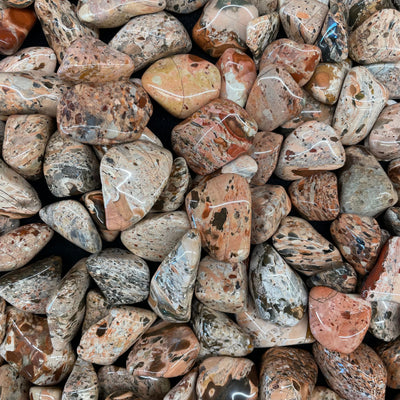
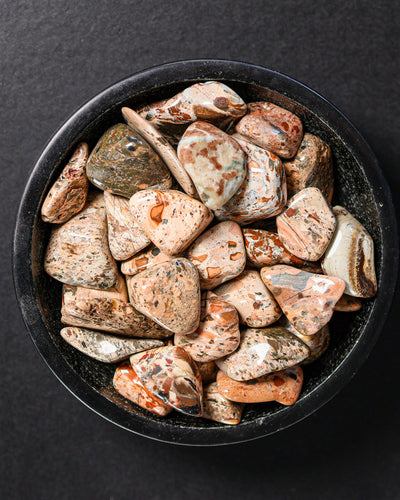
- Rich, swirling red, brown, and cream patterning
- Grounding member of the jasper family
- Traditionally used to absorb negative energy
- Builds steady, quiet confidence
- No two stones share the same pattern
Intentions
Brief Overview
Jasperite is a trade name for a dense, richly banded jasper valued for its earthy palette and durability. Like all members of the jasper family, it is a cryptocrystalline quartz — solid, opaque, and shaped by long, slow mineral deposition — worn and carried for its grounding, protective reputation as much as for its pattern.
Properties
Jasperite works the way solid ground works: quietly, underfoot, until you notice how much it has been holding you up. It steadies frayed nerves, absorbs the static of a chaotic day, and gives an anxious mind something dense and dependable to hold onto. Traditionally counted among the most protective members of the jasper family, it is often kept close during periods that call for endurance rather than speed.
Metaphysical Properties
- Grounds scattered or restless energy back into the body
- Traditionally used to absorb and buffer negative influences
- Supports steady follow-through on long-term goals
- Encourages honesty with yourself during difficult decisions
- Believed to cleanse and steady the aura after draining days
Physical Properties
- Type: Cryptocrystalline quartz (jasper)
- Color: Red, brown, tan, and cream, banded
- Luster: Waxy to vitreous
- Structure: Massive, microcrystalline, opaque
Meaning & Energy
Jasperite means staying power. Its energy is not showy — it does not spike or shimmer — but it holds, the way bedrock holds a house through weather it never sees. To work with Jasperite is to borrow some of that endurance: the willingness to keep going through a long project, a hard season, or a slow recovery, one steady step at a time.
Emotions
When your thoughts are scattered in six directions, Jasperite gives you somewhere to land. You may notice it easing the low hum of background stress, the kind that makes small decisions feel heavier than they are. It supports you through necessary conflict too, lending the nerve to stay honest instead of avoiding what needs to be said.
Crystal Pairings
- Jasper – the broader family stone, doubling grounding and protective support
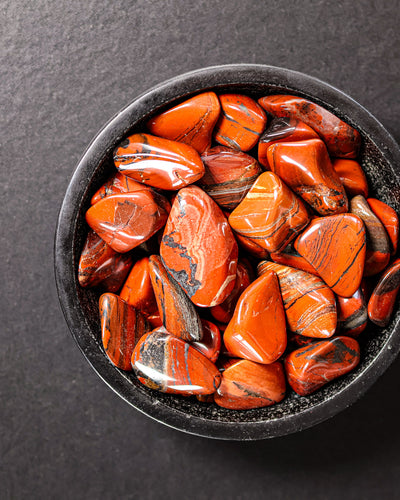
- Red Jasper – adds bold vitality and courage to Jasperite's steady grounding
- Brecciated Jasper – brings healing gentleness to complement Jasperite's strength
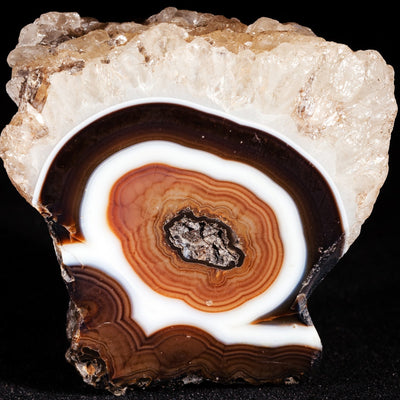
- Agate – layers in emotional balance alongside Jasperite's earthy stability
Science & Origin
Jasperite belongs to the jasper family, a group of opaque, cryptocrystalline quartz stones distinguished by their banding and color, most often from iron oxide impurities carried in ancient groundwater.
- Also Known As: Jasper (general trade term)
- Formation: Forms as silica-rich groundwater or volcanic ash slowly fills rock cavities, cementing into a dense, banded stone over long periods of geologic time.
- Safety Note: Jasper is generally safe for everyday handling and wear; no special precautions are needed beyond standard cleaning care.
Ancient Myths
- Jasper of many kinds was carved into amulets and seals by the ancient Egyptians, who prized its dense, earthy color as a stone of protection carried into the afterlife.
- Babylonian and Assyrian craftsmen carved jasper into cylinder seals, trusting the stone's durability to press a lasting, identifying mark into wet clay.
- The Roman naturalist Pliny the Elder catalogued numerous jasper varieties by color and origin in his first-century Naturalis Historia, treating the stone as both a protective and prized material.
Chakras Table
| Chakra | Connection | Healing Focus | Energy Type |
|---|---|---|---|
| Root | Grounds scattered energy into the body | Steadying restless or anxious focus | Stabilizing |
| Solar Plexus | Builds quiet, steady confidence | Supporting resolve and follow-through | Strengthening |
Planets Table
| Planet | Influence | Energy |
|---|---|---|
| Mars | Drive, courage, protective energy | Assertive, energizing |
| Earth | Grounding and material stability | Steady, dependable |
Zodiacs Table
| Zodiac | Attribute | Benefit |
|---|---|---|
| Leo | Bold, warm-hearted determination | Adds steady endurance to natural confidence |
| Scorpio | Intense focus and resilience | Channels intensity into grounded strength |
Elements Table
| Element | Power | Aspect |
|---|---|---|
| Earth | Grounding and physical stability | Steadying |
| Fire | Courage and protective resolve | Warming |
Sacred Numbers Table
| Number | Vibration | Meaning |
|---|---|---|
| 6 | Harmony and nurturing | A caretaking number tied to steady, quiet support |
| 4 | Structure and endurance | The number of solid foundations built to last |
Color Variations
- Deep red bands from iron-rich deposits
- Warm brown and tan swirls from mineral-laden water
- Cream to ivory veining where silica ran purest
- Occasional gray undertones in less iron-rich zones
Mohs Scale Hardness
At 6.5 on the Mohs scale, Jasperite sits comfortably above household dust and most metals, resisting everyday scuffs from keys or coins in a pocket or on a shelf. It still deserves care around harder stones like quartz or topaz, which can leave fine scratches on its polished surface.
Chemical Formula
Jasperite's chemical formula is silicon dioxide, SiO₂, the same base composition as all quartz varieties.
- Silicon (Si) — forms the mineral's crystal lattice
- Oxygen (O) — bonds with silicon to build the quartz structure
- Iron oxide impurities — responsible for the red, brown, and tan coloring
Summary of Composition
- Mineral Class: Silicate (quartz/chalcedony group)
- Crystal System: Trigonal (microcrystalline)
- Transparency: Opaque
- Luster: Waxy to vitreous
Care Instructions
- Clean with a soft, dry cloth to preserve its polish.
- Avoid extended soaking, which can dull surface luster.
- Keep away from harsh chemicals and abrasive cleaners.
- Store separately from harder stones to prevent surface scratching.
Final Summary
Jasperite is what steadiness looks like when it is allowed to take a shape. It will not rush you, but it will not let you drift either — it simply holds, patiently, until your own footing returns.